


News Center
Focus on new trends in enterprise development and record every step forward.
Common terms and definitions for cigarette tow
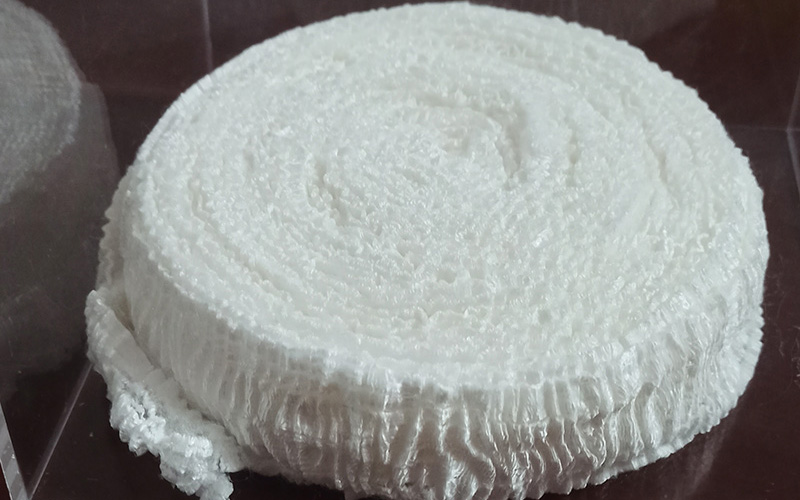
Cigarette tow is the core material for manufacturing cigarette filters, and its common terms and definitions are as follows:
1、 Basic terminology
Tow (tow)
Continuous bundle fiber material, usually made of synthetic fibers such as cellulose acetate and polypropylene, used for producing cigarette filters.
Denier per Filament (DPF)
A unit for measuring the fineness of a single fiber, expressed in grams of fiber weight per 9000 meters of length. The smaller the DPF value, the finer the fibers.
Total Denier
Refers to the total fineness of the entire bundle of fibers, which is the product of single denier and the number of fibers. Common range: 25000 to 50000 dan.
Cross Section Shape
The geometric shape of the fiber cross-section, such as "Y-shaped", "I-shaped", etc., affects the hardness, adsorption performance, and processing characteristics of the fiber bundle.
2、 Terminology for Process Performance
Crimp Frequency
The number of bends per unit length of fiber (usually measured as "per 25mm") affects the fluffiness and elasticity of the bundle.
Crimp Level
The index that describes the degree of fiber bending affects the hardness and breathability of the filter.
Oil content (Finish Content)
The proportion of lubricants or additives added to the surface of the fiber bundle is usually 0.1% -0.5%, used to improve processing performance.
Moisture Content
The moisture content in the filament bundle is usually within the standard range of 5% to 7%, which affects the flexibility and electrostatic control of the filament bundle.
3、 Quality control terminology
Whiteness
The whiteness of the fiber bundle affects the appearance of the filter.
Impurities
The content of non fibrous substances (such as gel particles and foreign matters) in the tow should be strictly controlled to ensure the safety of the filter tip.
Tensile Strength
The ability of fiber bundles to resist breakage affects the breakage rate during the production process.
Openness
The difficulty of separating the fiber bundle during the opening process affects the uniformity of filter forming.
4、 Application related terminology
Filter Rod
A cylindrical filter unit made by rolling fiber bundles through a molding machine.
Pressure Drop
The resistance generated by smoke passing through the filter, usually measured in millimeters of water column (mm H ₂ O), affects the smoking experience.
Hardness
The compressive strength of filter rods, usually expressed as a percentage, is related to the curling performance and processing technology of the fiber bundle.
Filtration Efficiency
The retention ability of filters for substances such as tar and nicotine in smoke is related to the structure of the fiber bundle and additives.
5、 Material type terminology
Cellulose Acetate Tow
The most common cigarette tow is made of cellulose acetate and has selective adsorption properties.
Polypropylene Tow
Low cost, but poor adsorption performance, commonly used in mid to low end cigarettes.
Composite Tow
Made by mixing various materials such as activated carbon and modified fibers, used for functional filters.
6、 Production and testing terminology
Tow Opening Rate
The uniformity of fiber bundle dispersion during processing affects the weight stability of filter rods.
Tow Band
The ribbon structure formed by the filament bundle before entering the forming machine must maintain a consistent width.
Acetone Adsorption Value
Technical indicators used to evaluate the quality of acetate fiber bundles, reflecting their porous structural characteristics.
summary
The term 'cigarette tow' encompasses material properties, process parameters, and quality standards, which collectively determine the physical properties, adsorption efficiency, and production efficiency of the filter. Different cigarette brands will choose bundles with specific parameters based on product positioning (such as low tar, high breathability, etc.).
Latest News
-
What is cellulose acetate material
2026-04-11 -
Filtration Principles and Main Types of Cellulose Acetate Cigarette Filters
2026-04-08 -
Quality Inspection Report on Industrial Diacetate Cellulose White Powder
2026-04-07 -
Physical and Chemical Properties of White Powder of Cellulose Diacetate
2026-04-03 -
Acetate cellulose sheet raw material industrial use Acetate cellulose powder
2026-04-02 -
Which specification of cellulose acetate is better for leather
2026-03-10
Related Information
-
Filtration Principles and Main Types of Cellulose Acetate Cigarette Filters
2026-04-08 -
The role of the washer in the production process of cellulose acetate flakes for cigarette
2026-01-14 -
Technical Requirements for Cellulose Acetate Used in Cigarette Factories
2026-01-08 -
Selection requirements for cellulose in cigarette filter rods
2025-12-26 -
Technical requirements for cellulose acetate tow raw material(cellulose acetate flakes) for cigarette filter rods
2025-12-24 -
Common terms and definitions for cigarette tow
2025-12-20
Message
We won't track your information when you visit our site. But in order to comply with your preferences, we'll have to use just one tiny cookie so that you're not asked to make this choice again.