


News Center
Focus on new trends in enterprise development and record every step forward.
Selection requirements for cellulose in cigarette filter rods
The selection of cellulose (mainly referring to cellulose acetate or cellulose diacetate) for cigarette filter rods is one of the core technologies in cigarette manufacturing, which requires extremely fine and strict requirements. The following are comprehensive selection requirements:
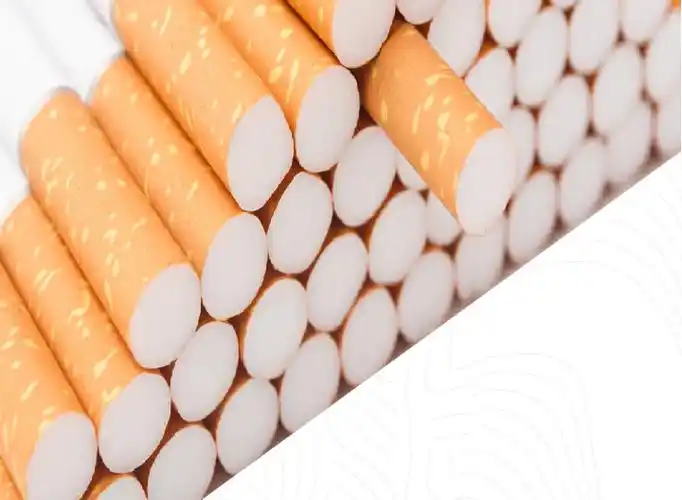
ONE、 Core material: Cellulose acetate tow
The filter rod is mainly made of cellulose acetate fibers. When selecting, the following multidimensional requirements must be met:
1. Physical structural indicators
Denier per Filament (dpf): Refers to the thickness of a single fiber. Usually ranging from 3.0-5.0 dpf.
Requirement: The DPF value affects the hardness, suction resistance, and filtration efficiency of the filter. Accurate selection is required based on product design (such as low tar, conventional). The smaller the DPF, the finer the fibers, the larger the specific surface area, and the higher the theoretical filtration efficiency, but the suction resistance may also increase.
Total Denier: Refers to the total thickness of a bundle of fibers. The common range is 20000-40000 denier.
Requirement: Match the circumference of the cigarette and the length of the filter rod. The total denier affects the hardness and pressure drop (suction resistance) of the filter rod. It must be stable to ensure consistency in the formation of the filter rod.
The cross-sectional shape of the filament bundle is usually Y-shaped or toothed.
Requirement: The irregular cross-section can increase the fiber specific surface area and improve the mechanical retention and diffusion adsorption capacity for particulate matter. Y-shaped is an industry standard that provides a good balance between hardness and filtration efficiency.
2. Chemical and safety indicators
Acetic degree (acetyl content): usually between 52% and 55%.
Requirement: It directly affects the heat resistance, hydrolysis resistance, plasticity, and safety of the fiber. The appropriate acetyl content can ensure that the filter is stable in shape during smoking, does not release harmful substances, and has good adhesion with plasticizers (triacetin glycerol ester).
Residual solvents (acetone, dichloromethane, etc.) content:
Requirement: It must be extremely low (usually at the ppm level), strictly comply with food grade and medical device grade standards, and ensure that there is no odor or harmful solvent release when smoke passes through.
Limit of heavy metals and harmful substances:
Requirement: The content of heavy metals such as lead, arsenic, and mercury must comply with international standards (such as ISO and FDA standards) to ensure consumer safety.
3. Processing and performance indicators
Plasticizer (glyceryl triacetate) absorption rate and binding properties:
Requirement: The tow must be able to uniformly and efficiently absorb plasticizers, and quickly solidify into shape after heating. The absorption rate and curing speed directly affect the hardness, molding efficiency, and quality stability of the filter rod.
Moisture content:
Requirement: It needs to be controlled within a narrow range (such as 3-6%). Low moisture content, brittle fiber bundles, easy to generate static electricity and breakage; Excessive moisture can affect the absorption and curing effect of plasticizers, and may lead to mold growth.
Thermal stability:
Requirement: Fibers must not soften, deform, or produce odors when heated (especially when smoke passes through), and must maintain structural integrity.
Color and Purity:
Requirement: The color should be white and uniform, without any impurities such as yellow spots or black spots. Impurities can affect the appearance and are more likely to produce odors at the combustion end.
TWO、 Functional selection requirements (for product design)
Based on the market positioning of cigarette brands and the goal of reducing coke and harm, there are specific functional oriented choices for fiber bundles:
High filtration efficiency type:
Choose finer DPF, higher total denier, or special cross-sectional bundles to increase the retention of tar and nicotine.
Low suction resistance/high breathability type:
Choose slightly thicker DPF or specific structured fiber bundles to ensure smooth suction while maintaining a certain filtering effect. Often used in conjunction with laser punched water pine paper.
High hardness/full mouth feel type:
Choose fiber bundles with higher total denier and better adhesion with plasticizers to produce filters with high hardness and full mouthfeel, enhancing the product's sense of grade.
Special functional type:
Activated carbon composite filter: The fiber bundle needs to have the ability to uniformly mix and solidify with activated carbon particles.
Hollow/composite filter: The fiber bundle segment needs to have good cutting surface and molding stability in order to be composite with other material segments (such as cavities, paper segments).
THREE、 Process and cost requirements
Processing adaptability:
The fiber bundle must be highly matched with the filter rod forming machine of the customer's factory (such as Acquisition, FILTEK, and other brands) to ensure stable operation at production speeds (up to 600 meters/minute or more), low wire breakage rate, and high forming qualification rate.
Batch consistency:
This is one of the most important requirements. All physical and chemical indicators between different batches must be highly consistent to ensure the stability of the final cigarette product's resistance, taste, and filtration efficiency. Suppliers must have a strict quality control system.
Cost effectiveness:
On the premise of meeting all technical indicators, it is necessary to consider raw material costs, processing energy consumption, and yield, and pursue the optimal comprehensive cost.
Summary: The core concept of selection
The selection of cellulose for cigarette filter rods essentially seeks a precise balance between "filtration efficiency," "suction resistance (taste)," "hardness (texture)," and "cost.
Latest News
-
What is cellulose acetate material
2026-04-11 -
Filtration Principles and Main Types of Cellulose Acetate Cigarette Filters
2026-04-08 -
Quality Inspection Report on Industrial Diacetate Cellulose White Powder
2026-04-07 -
Physical and Chemical Properties of White Powder of Cellulose Diacetate
2026-04-03 -
Acetate cellulose sheet raw material industrial use Acetate cellulose powder
2026-04-02 -
Which specification of cellulose acetate is better for leather
2026-03-10
Related Information
-
Filtration Principles and Main Types of Cellulose Acetate Cigarette Filters
2026-04-08 -
The role of the washer in the production process of cellulose acetate flakes for cigarette
2026-01-14 -
Technical Requirements for Cellulose Acetate Used in Cigarette Factories
2026-01-08 -
Selection requirements for cellulose in cigarette filter rods
2025-12-26 -
Technical requirements for cellulose acetate tow raw material(cellulose acetate flakes) for cigarette filter rods
2025-12-24 -
Common terms and definitions for cigarette tow
2025-12-20
Message
We won't track your information when you visit our site. But in order to comply with your preferences, we'll have to use just one tiny cookie so that you're not asked to make this choice again.