


News Center
Focus on new trends in enterprise development and record every step forward.
What are the common specifications of cellulose acetate tow
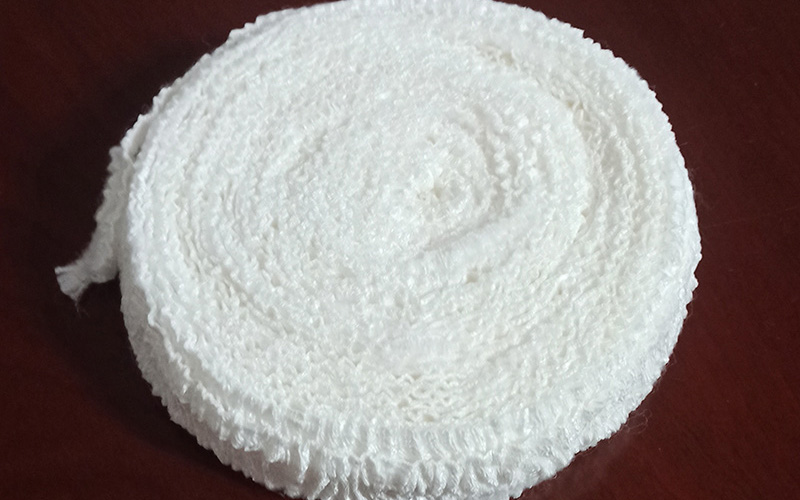
Cellulose acetate tow is the main raw material for manufacturing cigarette filters, and its specifications are mainly designed and selected based on the performance requirements of the filter, such as hardness, filtration efficiency, pressure drop, etc. The common specifications are mainly defined by the following key parameters:
1. Denier per Filament (dpf)
Definition: Refers to the thickness of a single fiber, measured in "Denier", which is the weight in grams of a 9000 meter long fiber. The smaller the dpf value, the finer the fibers.
Common range: usually 3.0, 3.5, 4.0, 5.0, 8.0, etc.
influence:
Low DPF (such as 3.0-4.0): The fibers are finer, the specific surface area is larger, and the ability to intercept smoke particles is stronger (with higher filtration efficiency), but it may increase the suction resistance.
High DPF (such as 5.0-8.0): The fibers are thicker, the tow is softer, the filter hardness may be lower, and the suction resistance is relatively small.
2. Total Denier
Definition: Refers to the thickness of the entire fiber bundle, that is, the overall density of the fiber bundle.
Common range: ranging from several thousand dan to tens of thousands dan, such as 10000, 15000, 20000, 35000, 40000, etc.
influence:
The larger the total denier, the thicker the fiber bundle, and the more fiber bundles can be filled per unit length of filter. The filter is usually denser and harder.
It needs to be matched with the filter rod forming process of the cigarette machine.
3. Cross Sectional Shape of Wire Bundle
Common types:
Y-shaped (three leaf shaped): the most common, with a large specific surface area, high filtration efficiency, and good hardness.
Circular: Sometimes used for special requirements.
Impact: Irregular cross-sections (such as Y-shaped) can increase fiber surface area, improve retention efficiency, and enhance filter structure strength.
4. Plasticizer Demand
Definition: During the molding process, plasticizers (usually glycerol triacetate) need to be added to the fiber bundle to bond the fibers and form a hard filter. The demand value for plasticizers refers to the weight percentage of plasticizers required to achieve standard hardness.
Common range: usually 6% -12%.
Impact: High demand fiber bundles require more plasticizers, which affects production costs and filter curing speed.
5. Hardness and Pressure Drop
These two are key performance indicators of filter products, which are not directly related to the specifications of the fiber bundle, but are determined by the combination of the above parameters.
Pressure drop (suction resistance): The typical target range is 3000-5000 Pa, depending on the filling density, dpf, and total denier of the fiber bundle.
Latest News
-
What is cellulose acetate material
2026-04-11 -
Filtration Principles and Main Types of Cellulose Acetate Cigarette Filters
2026-04-08 -
Quality Inspection Report on Industrial Diacetate Cellulose White Powder
2026-04-07 -
Physical and Chemical Properties of White Powder of Cellulose Diacetate
2026-04-03 -
Acetate cellulose sheet raw material industrial use Acetate cellulose powder
2026-04-02 -
Which specification of cellulose acetate is better for leather
2026-03-10
Related Information
-
What is cellulose acetate material
2026-04-11 -
Filtration Principles and Main Types of Cellulose Acetate Cigarette Filters
2026-04-08 -
Quality Inspection Report on Industrial Diacetate Cellulose White Powder
2026-04-07 -
Physical and Chemical Properties of White Powder of Cellulose Diacetate
2026-04-03 -
Acetate cellulose sheet raw material industrial use Acetate cellulose powder
2026-04-02 -
Application of cellulose acetate sheet in the eyewear industry
2026-04-01
Message
We won't track your information when you visit our site. But in order to comply with your preferences, we'll have to use just one tiny cookie so that you're not asked to make this choice again.