


News Center
Focus on new trends in enterprise development and record every step forward.
Technical requirements for cellulose acetate tow raw material(cellulose acetate flakes) for cigarette filter rods
The raw material for cigarette filter rod fiber bundles, cellulose acetate flakes (referred to as "diacetate flakes"), has extremely strict and precise technical requirements, which directly determine the processing performance of subsequent fiber bundles, the forming quality of filter rods, and the final filtration efficiency and suction experience.
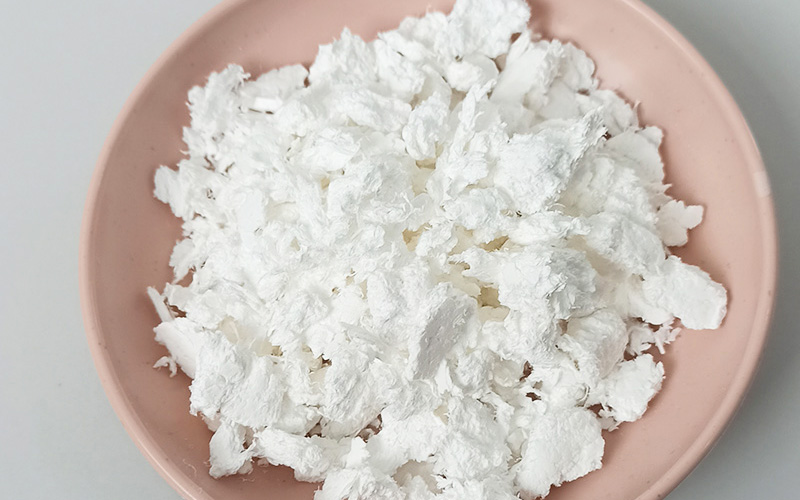
The following are the core technical requirements for vinegar flakes, which are usually controlled from several dimensions including chemical indicators, physical indicators, and application performance indicators:
ONE、 Chemical indicators (core foundation)
This is the foundation of the quality of vinegar flakes, ensuring the consistency and reactivity of the materials.
1. Acetic acid content (combined acid value):
Range: Typically required to be between 53.5% and 55.5% (specific values may vary slightly depending on the manufacturer and brand).
Meaning: This is a key indicator for distinguishing between primary vinegar, secondary vinegar, and tertiary vinegar. The content of acetic acid directly affects the solubility, viscosity, and hydroxyl activity of vinegar flakes. Low content, strong hydrophilicity, poor thermoplasticity; If the content is too high, the compatibility with plasticizers (triacetin glycerol ester) will deteriorate, affecting the bonding and forming of the fiber bundle.
2. Free acid (calculated as acetic acid) content:
Requirement: Very low, usually<0.05%.
Meaning: Excessive free acid can corrode production equipment, affect the whiteness and stability of fiber bundles, and produce adverse odors during subsequent processing.
3. Viscosity (or degree of polymerization):
Expression method: It is usually tested for its solution viscosity in a certain concentration of solvent (such as acetone), or its average polymerization degree is calculated.
Scope: There are different grades (such as high viscosity, medium viscosity, low viscosity) based on the required strength and hardness of the tow. The range of polymerization degree is usually between 180-250.
Meaning: Viscosity directly determines the mechanical strength and toughness of the final fiber bundle. Low viscosity, easy breakage of fiber bundles, and insufficient hardness of filter rods; The viscosity is too high, making spinning difficult and the fiber bundle feels stiff.
4. Moisture content:
Requirement: Usually controlled between 1.0% and 4.0% (depending on storage and transportation conditions).
Meaning: Moisture affects the storage stability, flowability, and dissolution rate of vinegar flakes in acetone. Excessive moisture can cause clumping, while insufficient moisture may generate static electricity.
5. Ash content:
Requirement: Extremely low, usually<0.05%.
Meaning: Ash content represents inorganic salt impurities. If it is too high, it can affect the filtration performance of the spinning solution and the lifespan of the spinneret, and may also affect the thermal stability and whiteness of the fiber bundle.
6. Solubility and solution clarity:
Requirement: It must be completely dissolved in a specific concentration of acetone solution to form a uniform, transparent, impurity free, colorless or slightly yellow solution.
Meaning: This is a prerequisite for the preparation of spinning solution. Insoluble substances or turbidity can cause spinning breakage, defects in the fiber bundle, and severe clogging of the filter element.
TWO、 Physical and appearance indicators
1. Appearance:
Form: White or slightly yellow, flaky, granular or flocculent (flaky is the most common).
Requirement: Uniform and consistent color, without visible impurities such as black spots, coke particles, metal shavings, etc.
2. Bulk density:
Meaning: Affects the accuracy of storage volume and feeding measurement.
3. Particle size distribution:
Meaning: Affects the uniformity of dissolution rate. Require relatively concentrated distribution to avoid excessive fine powder (prone to dust and explosion) or large particles (slow dissolution).
THREE、 Application performance indicators (final evaluation criteria)
These indicators are evaluated through simulation or actual spinning and forming processes.
1. Thermoplasticity:
Meaning: Under the action of plasticizer (triacetin glycerol ester), diacetic acid flakes/fiber bundles can soften and bond at a specific temperature, which is the fundamental basis for the solidification and molding of filter rods. Require its thermoplastic window (the temperature range from softening to melting) to be moderate, ensuring good molding while avoiding high-temperature decomposition.
2. Compatibility with plasticizers:
Requirement: Diacetate flakes must be able to quickly and uniformly absorb and bind with triacetin glycerol ester.
Testing: It is often evaluated by measuring the "plasticizer absorption rate" and "plasticizer retention rate".
3. Filtering performance related:
Although the filtration efficiency is more determined by the single denier of the tow, the shape of the cross section and the structure of the filter rod, the characteristics such as the uniformity of the molecular weight distribution and the absence of gel particles are the basis for producing a uniform and stable tow, which indirectly guarantees the stability of the filtration performance of the filter rod.
FOUR、 Safety and hygiene indicators
1. Heavy metal residues: There are extremely strict limit requirements for lead, arsenic, mercury, etc.
2. Residual organic solvents: The residual solvents such as methanol and dichloromethane used in the production process must be below safety standards.
3. Biosafety: Materials must comply with food contact materials or relevant industry safety standards.
summary
Two vinegar flakes for cigarette filter rods are a high-tech specialized chemical. The core of its technical requirements lies in:
High purity and uniformity: strict chemical indicators and minimal inter batch differences.
Accurate molecular structure control: precise regulation of its thermoplastic and mechanical properties through acetic acid content and viscosity.
Excellent application adaptability: It is necessary to perfectly adapt to the "acetone dry spinning" process and the "plasticizer thermosetting molding" process.
Each tobacco filament bundle manufacturer (such as Seranis, Eastman, Ruiyang, etc.) has its own more detailed brand specifications, which are the industry's universal core standards. Tobacco factories and filter rod factories will choose specific grades of cellulose fiber bundles made from vinegar flakes based on their own equipment and product design (such as different requirements for filter rods for fine cigarettes and burst cigarettes).
Latest News
-
What is cellulose acetate material
2026-04-11 -
Filtration Principles and Main Types of Cellulose Acetate Cigarette Filters
2026-04-08 -
Quality Inspection Report on Industrial Diacetate Cellulose White Powder
2026-04-07 -
Physical and Chemical Properties of White Powder of Cellulose Diacetate
2026-04-03 -
Acetate cellulose sheet raw material industrial use Acetate cellulose powder
2026-04-02 -
Which specification of cellulose acetate is better for leather
2026-03-10
Related Information
-
What is cellulose acetate material
2026-04-11 -
Filtration Principles and Main Types of Cellulose Acetate Cigarette Filters
2026-04-08 -
Quality Inspection Report on Industrial Diacetate Cellulose White Powder
2026-04-07 -
Physical and Chemical Properties of White Powder of Cellulose Diacetate
2026-04-03 -
Acetate cellulose sheet raw material industrial use Acetate cellulose powder
2026-04-02 -
Application of cellulose acetate sheet in the eyewear industry
2026-04-01
Message
We won't track your information when you visit our site. But in order to comply with your preferences, we'll have to use just one tiny cookie so that you're not asked to make this choice again.