


News Center
Focus on new trends in enterprise development and record every step forward.
What are the classifications of industrial cellulose acetate flakes based on their uses
Industrial cellulose acetate flakes (usually referring to cellulose diacetate flakes, abbreviated as CDA) can be mainly divided into the following categories based on their ultimate use and performance requirements:
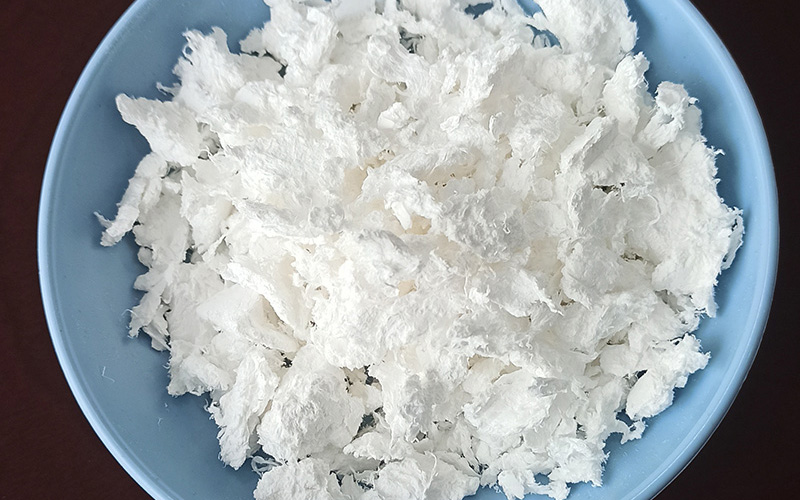
1. Use cellulose acetate flakes for filter tips
Used for making cigarette filter tips (bundles).
Main features: good adsorption performance, certain hardness, and formability.
Application: The main material of cigarette filter rods accounts for a large proportion of the consumption of cellulose acetate flakes.
Requirement: It must comply with food grade safety standards, have suitable pore structure and adsorption efficiency.
2. Two cellulose acetate flakes for textile use
Used for producing cellulose acetate fibers (acetate fibers).
Main features: It has good spinning performance, glossiness, dyeability, and hand feel.
Application: Making high-end clothing linings, ribbons, ties, women's clothing, etc.
Requirement: The degree of polymerization and esterification should be suitable for the spinning process, with low impurity content.
3. Plastic cellulose acetate flakes
Used for producing cellulose acetate plastics (such as injection grade and extrusion grade materials).
Main features: good transparency, toughness, processability, and weather resistance.
Application:
Glasses frame: lightweight, easy to process, good gloss.
Tool handle: insulated and impact resistant.
Automotive parts, pen holders, cosmetic packaging, etc.
Requirement: Liquidity and thermal stability must comply with injection molding or extrusion processes.
4. Film with cellulose acetate flakes
Used for producing cellulose acetate film.
Main features: high transparency, low haze, good mechanical strength, and barrier properties.
Application:
Packaging materials: food and drug packaging.
Industrial film: film substrate (historically used for photographic film), polarizing film protective film for LCD displays, etc.
Requirements: High optical performance, surface flatness, and cleanliness.
5. Two cellulose acetate flakes for coatings and adhesives
As a film-forming substance or modifier.
Application:
Paint: Used for coating surfaces such as wood and metal, providing gloss and protection.
Adhesive: Used for bonding specific materials.
Requirement: Good solubility and compatibility with other resins.
6. Other special purposes
Dialysis membrane material: used in the medical field for hemodialysis.
Separation membrane: used for gas separation, pervaporation, etc.
Ceramic molding adhesive: provides temporary strength before high-temperature sintering.
summary
The classification of industrial cellulose acetate flakes is mainly based on their downstream processing requirements and end product performance. There are clear requirements for the specifications of cellulose acetate flakes (such as molecular weight, acetyl value, additives, etc.) for different purposes, and the production process will be customized by adjusting process parameters such as hydrolysis degree and substitution degree. Textiles, filters, and plastics are the most widely consumed application areas.
Latest News
-
What is cellulose acetate material
2026-04-11 -
Filtration Principles and Main Types of Cellulose Acetate Cigarette Filters
2026-04-08 -
Quality Inspection Report on Industrial Diacetate Cellulose White Powder
2026-04-07 -
Physical and Chemical Properties of White Powder of Cellulose Diacetate
2026-04-03 -
Acetate cellulose sheet raw material industrial use Acetate cellulose powder
2026-04-02 -
Which specification of cellulose acetate is better for leather
2026-03-10
Related Information
Message
We won't track your information when you visit our site. But in order to comply with your preferences, we'll have to use just one tiny cookie so that you're not asked to make this choice again.