


News Center
Focus on new trends in enterprise development and record every step forward.
Introduction to Diacetate Cellulose flakes and Diacetate Cellulose tow for Tobacco Use
This is a detailed process flow and industry chain introduction about cellulose acetate flakes for tobacco use and their downstream products, cellulose acetate tow. These two products have a continuous upstream and downstream relationship: cellulose acetate flake is the raw material for fiber bundles, and cellulose acetate fiber bundles are the raw material for filter tips, specifically used for manufacturing cigarette filters.
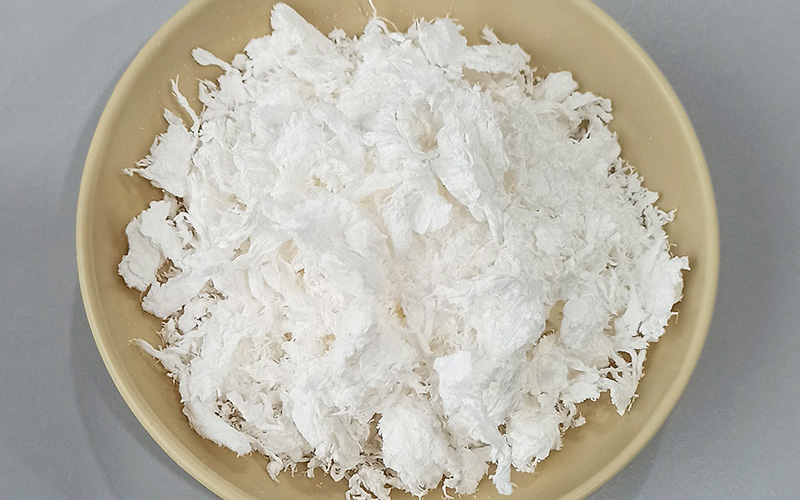
Part One: Production Process of Cellulose Diacetate flakes
Diacetate cellulose flake is the raw material for producing fiber bundles, and its essence is to modify natural cellulose through chemical reactions.
1. Upstream raw materials
Cellulose pulp: High purity (alpha cellulose content>95%) wood pulp or cotton pulp, which is the backbone of the reaction.
Acetic anhydride: a core acetylation reagent.
Acetic acid: used as a reaction solvent and participant.
Sulfuric acid: as a catalyst.
Pure water: used for hydrolysis, washing, and precipitation.
2. Core production process flow (acetylation and hydrolysis)
This is a typical "homogeneous acetylation" process, catalyzed by sulfuric acid in an acetic acid medium.
Step 1: Pre treatment (activation)
Mix the dried cellulose pulp with glacial acetic acid in a preprocessor.
The purpose is to cause swelling of cellulose, disrupt its tight crystal structure, and allow reactants to smoothly enter the interior of the fiber, ensuring uniform subsequent reactions.
Step 2: Acetylation reaction
Put the activated pulp into a closed acetylation reactor with a mixture of acetic anhydride, glacial acetic acid, and a small amount of sulfuric acid.
Under strict temperature control and stirring conditions, acetic anhydride undergoes esterification reaction with hydroxyl groups (- OH) on cellulose molecular chains to produce cellulose triacetate.
Key indicator: At this point, almost all three hydroxyl groups on each glucose unit are replaced by acetyl groups, and the combined acetic acid content can reach~62.5%. But at this time, the product is insoluble in acetone and cannot be used for spinning.
Step 3: Partial hydrolysis (maturation)
This is a crucial step in the production of cellulose acetate. Add dilute acetic acid and water to the reaction system and perform controlled partial hydrolysis under controlled temperature conditions.
The hydrolysis reaction will break some acetyl groups and reduce them to hydroxyl groups. By precise control of time, temperature, and water content, the combined acetic acid content can be accurately reduced to 52.0% -55.0% (i.e. tobacco standard).
This specific degree of acetylation ensures that the product can be completely dissolved in acetone and has appropriate hydrophilicity to meet filtration performance requirements.
Step 4: Precipitation
Inject the viscous reaction solution after hydrolysis into a large amount of stirred pure water.
Cellulose diacetate is insoluble in water and will precipitate as white snowflakes or particles. And the reaction medium (acetic acid, sulfuric acid, etc.) is dissolved in water.
Step 5: Washing and Purification
The precipitate undergoes multi-stage countercurrent washing and centrifugal separation to thoroughly remove residual acid, acetic anhydride, and acetic acid until it becomes neutral.
This step is crucial for product quality, as residual acid can cause degradation and discoloration of the product during storage and spinning processes.
Step 6: Drying and Forming
The cleaned wet material is dried using a rotary dryer or an air flow dryer.
The dried product is usually pressed or cut into uniformly sized white small flakes, which are called cellulose acetate flakes.
Final product characteristics: White flake solid, fragile, soluble in organic solvents such as acetone, with specific acetylation value and viscosity.
Part 2: Production process of cellulose acetate tow
Fiber bundle production is the process of dissolving cellulose acetate flakes and spinning them into fiber bundles using spinning technology.
1. Upstream raw materials
Diacetate cellulose flakes: from upstream processes.
Acetone: a core solvent used to dissolve cellulose acetate flakes and produce spinning solution.
Plasticizer (glyceryl triacetate): endows the fiber bundle with softness and plasticity.
Spinning oil agent: reduces fiber friction and improves post-processing performance.
Hot nitrogen/air: used for spinning channels.
2. Core production process flow (dry spinning)
Step 1: Preparation of spinning solution
Mix cellulose acetate flakes with acetone in a dissolution vessel with strong stirring.
Controlling concentration and temperature to form a uniform, transparent, and viscosity stable gel is called "spinning solution".
Step 2: Filtration and defoaming
The spinning solution undergoes multi-stage precision filtration (such as plate and frame filtration, filter cartridge filtration) to remove any small insoluble impurities.
Subsequently, it enters the defoaming tower and removes bubbles from the gel solution under vacuum or static conditions to prevent spinning breakage.
Step 3: Dry spinning
This is the mainstream technology for cigarette tow. The defoamed gel solution is transported to the spinning component by a precision metering pump.
In the component, the glue is extruded through a spinneret (with thousands of micropores), forming countless small streams of liquid.
These liquid flows vertically downward into a high-temperature spinning channel (filled with hot nitrogen or hot air). Acetone solvent evaporates rapidly at high temperatures and is collected and purified by the recycling system before being recycled.
Cellulose acetate solidifies into continuous solid monofilaments.
Step 4: Bundling, oiling, and curling
Thousands of single filaments coming out of the same spinneret converge into a wide, continuous bundle of filaments below the tunnel.
Apply spinning oil to the fiber bundle to improve its smoothness.
Key process - mechanical curling: The fiber bundle is forcibly pressed into a wavy permanent curl through a pair of hot gears or stuffing boxes. This is the core step to improve the filtration efficiency of the filter, as curling greatly increases the fluffiness and specific surface area of the fiber bundle, thereby more effectively intercepting smoke particles.
Step 5: Plasticization and Heat Setting
Spray plasticizers (glycerol triacetate) evenly onto the fiber bundle to soften the fibers and facilitate subsequent loosening and processing.
The filament bundle is passed through a heat setting machine in a relaxed state to remove internal stress, fix the curled shape, and thoroughly remove residual solvents.
Step 6: Spinning and Packaging
The fiber bundles are regularly folded into a huge packing box, forming several tons of tightly packed rectangular blocks for storage and transportation.
Part Three: Downstream Products and Applications
Cellulose acetate tow is an industrial fiber specifically designed for the cigarette industry.
1. Direct downstream product: cigarette filter rod
Processing process: The fiber bundle is wrapped in a filter rod forming machine and then reopened and expanded into a uniform thin mesh. It is then pulled by a conveyor belt and wrapped in forming paper. The paper edge is glued with latex, and finally cut into standard length (such as 120mm) filter rods by a high-speed knife wheel.
Function: This is the only purpose of the fiber bundle, and the filter rod is a standard accessory in the cigarette industry.
2. Terminal product: cigarettes
On the cigarette machine, the filter rod is connected to the cigarette (tobacco segment) through a tipping paper (water pine paper) to make a complete cigarette with a filter.
Core role:
Physical filtration: reduces inhaled particles such as tar and nicotine through mechanical interception and diffusion effects.
Provide taste and hardness: form appropriate absorption resistance, giving consumers the expected taste.
Functional platform: can serve as a carrier for activated carbon, fragrance particles, and harmful additives (such as "composite filters").
Summarize the process chain
Upstream chemical raw materials (pulp, acetic anhydride, etc.) → (through acetylation, hydrolysis) → cellulose acetate flake (intermediate) → (through dry spinning) → cellulose acetate tow (specialized product) → (through filter forming) → cigarette filter rod → (through cigarette assembly) → final consumer product: cigarettes
This chain reflects the complete transformation process from basic chemical raw materials to highly specialized consumer goods.
Latest News
-
What is cellulose acetate material
2026-04-11 -
Filtration Principles and Main Types of Cellulose Acetate Cigarette Filters
2026-04-08 -
Quality Inspection Report on Industrial Diacetate Cellulose White Powder
2026-04-07 -
Physical and Chemical Properties of White Powder of Cellulose Diacetate
2026-04-03 -
Acetate cellulose sheet raw material industrial use Acetate cellulose powder
2026-04-02 -
Which specification of cellulose acetate is better for leather
2026-03-10
Related Information
-
What is cellulose acetate material
2026-04-11 -
Filtration Principles and Main Types of Cellulose Acetate Cigarette Filters
2026-04-08 -
Quality Inspection Report on Industrial Diacetate Cellulose White Powder
2026-04-07 -
Physical and Chemical Properties of White Powder of Cellulose Diacetate
2026-04-03 -
Acetate cellulose sheet raw material industrial use Acetate cellulose powder
2026-04-02 -
Application of cellulose acetate sheet in the eyewear industry
2026-04-01
Message
We won't track your information when you visit our site. But in order to comply with your preferences, we'll have to use just one tiny cookie so that you're not asked to make this choice again.