


News Center
Focus on new trends in enterprise development and record every step forward.
Physicochemical Properties of Industrial Cellulose Diacetate Flakes
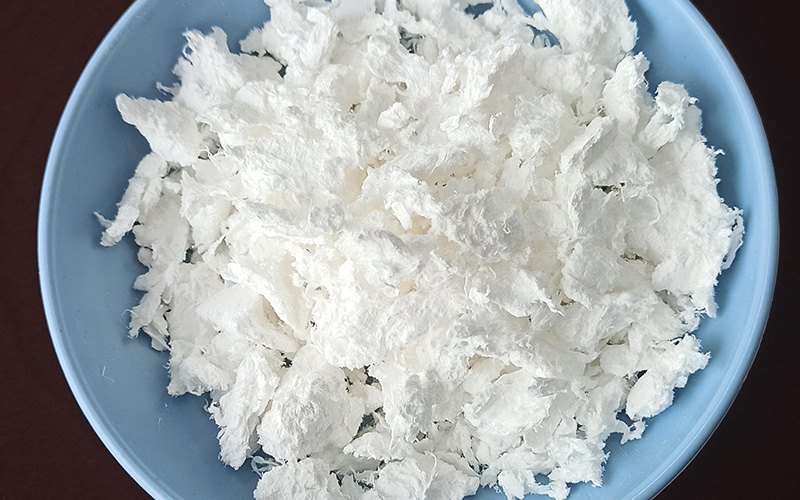
The following summarizes the typical physicochemical properties of industrial cellulose diacetate flakes (Cellulose Diacetate Flakes / CDA Flakes). The data is compiled based on common technical specifications from major industry suppliers (such as Eastman, Celanese, Daicel, and Cerdia). It applies to spinning grade, plastic grade, and general industrial processing applications.
1. Basic Chemical Properties
Item | Typical Range | Description |
Chemical Name | Cellulose Diacetate | Produced by partial esterification of natural cellulose |
Degree of Substitution (DS) | 2.2–2.5 | Theoretical maximum DS = 3; diacetate indicates partial substitution of hydroxyl groups by acetyl groups |
Acetyl Content | 29–34 wt% | Higher DS corresponds to higher acetyl content |
Purity / Main Component Content | ≥ 99% (dry basis) | Industrial grade typically ≥ 99% |
pH (10% ethanol solution) | 5.0–7.0 | Generally neutral to slightly acidic |
Ash Content | ≤ 0.05% | Industrial grade commonly ≤ 0.1% |
2. Physical Properties
Item | Typical Value or Range | Description |
Appearance | Transparent to milky-white flakes | Sheet/flake form, free of visible impurities |
Density | 1.28–1.30 g/cm³ | At room temperature |
Glass Transition Temperature (Tg) | ≈ 185–200°C | CDA exhibits relatively high rigidity |
Melting / Softening Point | ~230–260°C (decomposition begins) | No true melting point; decomposes upon heating |
Moisture Content | 2.0–6.0% | Varies with storage conditions |
Flake Size | 3–20 mm | Depends on manufacturer processing |
3. Solubility & Solvent Behavior
Solvent Type | Solubility |
Acetone | Easily soluble (most commonly used) |
Methylethyl ketone (MEK) | Good solubility |
Ethyl acetate / ethanol mixtures | Soluble or partially soluble |
Ethanol (pure) | Generally insoluble |
Water | Insoluble, low hygroscopicity |
Chloroform, dichloromethane | Soluble or swells |
Acetone is the most widely used industrial solvent for cellulose diacetate, especially in tow-to-filter-rod processing and film formation.
4. Thermal Properties
Item | Typical Data |
Thermal Decomposition Temperature | > 230°C |
Weight Loss Range | 230–350°C |
Thermal Stability | Moderate; requires stabilizers or strict processing temperature control |
5. Mechanical Properties (after curing/forming)
(The flakes themselves do not exhibit mechanical strength; the following reflects typical properties of shaped CDA materials for reference.)
Item | Value Range |
Tensile Strength | 40–60 MPa |
Elongation at Break | 10–20% |
Flexural Modulus | 1.5–2.5 GPa |
6. Environmental & Safety Characteristics
High bio-based content (derived from natural cellulose)
Better biodegradability than many petrochemical plastics, though strongly affected by environmental conditions
Combustion products are relatively clean: primarily CO₂, H₂O, and acetic acid vapor
Good storage stability; requires moisture and heat protection
Non-toxic, low irritation, meets FDA/EFSA requirements for many applications
Latest News
-
What is cellulose acetate material
2026-04-11 -
Filtration Principles and Main Types of Cellulose Acetate Cigarette Filters
2026-04-08 -
Quality Inspection Report on Industrial Diacetate Cellulose White Powder
2026-04-07 -
Physical and Chemical Properties of White Powder of Cellulose Diacetate
2026-04-03 -
Acetate cellulose sheet raw material industrial use Acetate cellulose powder
2026-04-02 -
Which specification of cellulose acetate is better for leather
2026-03-10
Related Information
-
Quality Inspection Report on Industrial Diacetate Cellulose White Powder
2026-04-07 -
Physical and Chemical Properties of White Powder of Cellulose Diacetate
2026-04-03 -
What is diacetate flake?
2026-01-26 -
The difference in application between cellulose diacetate and cellulose triacetate
2026-01-20 -
Main manufacturers and production capacity of cellulose acetate flakes in China
2026-01-10 -
Technical Requirements for Cellulose Acetate Used in Cigarette Factories
2026-01-08
Message
We won't track your information when you visit our site. But in order to comply with your preferences, we'll have to use just one tiny cookie so that you're not asked to make this choice again.