


News Center
Focus on new trends in enterprise development and record every step forward.
Classification of cellulose acetate
Cellulose acetate is primarily classified based on its degree of esterification or acetyl content, which determines its solubility, film-forming ability, spinnability, and ultimate application.
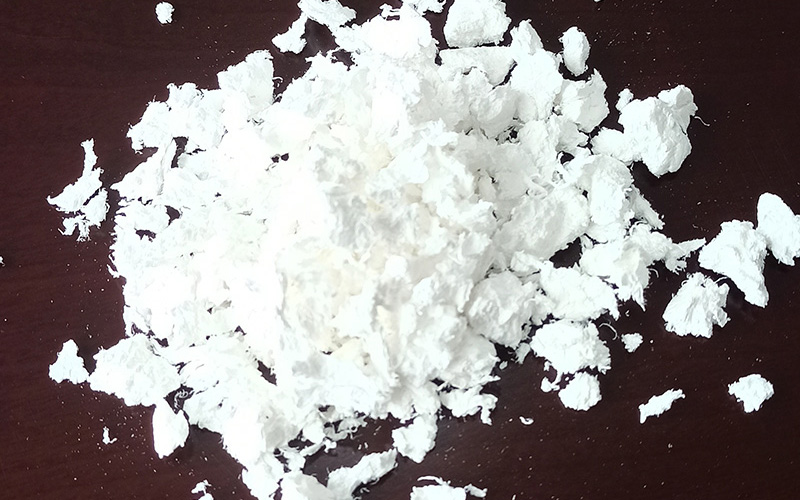
The most common classifications are as follows:
1. Cellulose triacetate
It is also known as primary cellulose acetate or fully acetylated cellulose.
Degree of esterification: High, with an average of 2.8~3.0 hydroxyl groups acetylated on each glucose unit.
Acetyl content: High, typically exceeding 60% (around 61.5%).
Solubility: Insoluble in acetone, requires chlorinated solvents such as dichloromethane and chloroform for dissolution.
Features and Uses:
Excellent optical properties: high transparency and low birefringence, making it a core raw material for manufacturing polarizers and protective films for liquid crystal displays.
High melting point and good thermal stability.
It has good weather resistance and dimensional stability.
Textile field: It can be spun into triacetate fiber for use in clothing and other applications.
2. Cellulose diacetate
This is the type with the highest production volume and the most extensive application, also known as secondary cellulose acetate.
Degree of esterification: Moderate, with an average of 2.2 to 2.7 hydroxyl groups acetylated on each glucose unit.
Acetyl content: Medium, typically ranging from 52% to 56%.
Solubility: Soluble in acetone, which is a key characteristic that makes it very convenient for processing.
Features and Uses:
Textile field: It is the main raw material for manufacturing diacetate fiber, which is used in high-end clothing lining, satin, women's fashion, etc.
Plastics field: After adding plasticizers, products such as eyeglass frames, tool handles, toys, and combs can be manufactured through injection molding, extrusion, and other methods. The products exhibit good gloss and provide a comfortable hand feel.
Thin film field: used for manufacturing packaging films, dialysis membranes, etc.
Filter material field: It is the core raw material for manufacturing cigarette filter tow.
3. Cellulose Monoacetate
The one with the lowest degree of esterification is rarely seen in practical bulk industrial applications, and is usually used as an intermediate or in special fields.
Latest News
-
What is cellulose acetate material
2026-04-11 -
Filtration Principles and Main Types of Cellulose Acetate Cigarette Filters
2026-04-08 -
Quality Inspection Report on Industrial Diacetate Cellulose White Powder
2026-04-07 -
Physical and Chemical Properties of White Powder of Cellulose Diacetate
2026-04-03 -
Acetate cellulose sheet raw material industrial use Acetate cellulose powder
2026-04-02 -
Which specification of cellulose acetate is better for leather
2026-03-10
Related Information
-
What is cellulose acetate material
2026-04-11 -
Filtration Principles and Main Types of Cellulose Acetate Cigarette Filters
2026-04-08 -
Quality Inspection Report on Industrial Diacetate Cellulose White Powder
2026-04-07 -
Physical and Chemical Properties of White Powder of Cellulose Diacetate
2026-04-03 -
Acetate cellulose sheet raw material industrial use Acetate cellulose powder
2026-04-02 -
Application of cellulose acetate sheet in the eyewear industry
2026-04-01
Message
We won't track your information when you visit our site. But in order to comply with your preferences, we'll have to use just one tiny cookie so that you're not asked to make this choice again.