


News Center
Focus on new trends in enterprise development and record every step forward.
Production process of dicellulose acetate
Let's delve into the production process of cellulose acetate. This is a complex chemical process, the core of which involves chemically converting natural cellulose (derived from wood pulp or cotton linters) into cellulose acetate soluble in acetone.
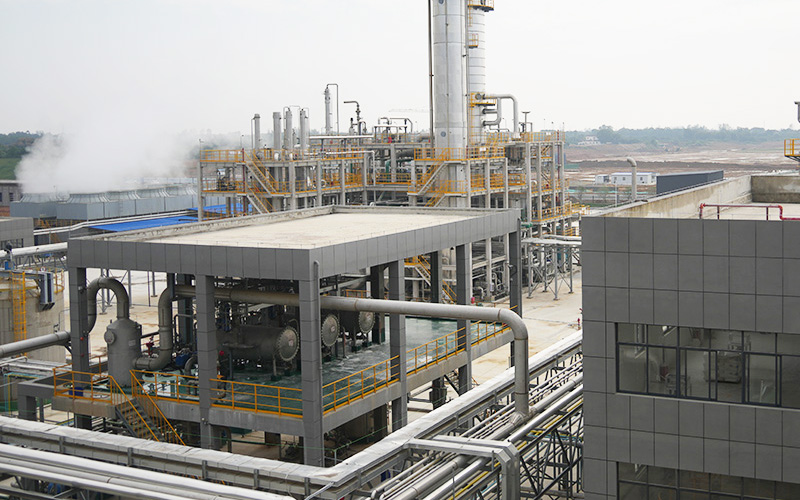
Phase 1: Raw material preparation and pretreatment
Raw materials:
High-purity wood pulp or cotton linter pulp is primarily used. The essence of these raw materials is cellulose, which needs to be refined to ensure extremely low impurity content.
Pre-treatment - Activation:
Mix the dried cellulose raw material thoroughly with glacial acetic acid in a mixer.
Objective: To allow glacial acetic acid to penetrate into the interior of cellulose, causing it to swell and open up its tightly packed crystalline structure. This "activation" step is crucial, as it ensures that the subsequent acetylation reaction can proceed uniformly and rapidly.
Stage 2: Acetylation reaction
This is the core chemical reaction of the entire process, which takes place in an equipment known as the "acetylation reactor".
Feeding: Add the activated cellulose, catalyst (usually concentrated sulfuric acid), and excess acetic anhydride to the reactor together.
Reaction conditions: The reaction is carried out under strictly controlled temperature (usually below 50°C) and with stirring.
Chemical reaction:
The glucose units in the cellulose molecular chain possess three active hydroxyl groups (-OH).
In these reactions, the hydroxyl groups undergo esterification with acetic anhydride, generating cellulose triacetate and releasing acetic acid.
Simplify the chemical formula:
[C₆H₇O₂(OH)₃]ₙ + 3n (CH₃CO)₂O → [C₆H₇O₂(OCOCH₃)₃]ₙ + 3n CH₃COOH
The product obtained at this point is cellulose triacetate, which is insoluble in acetone and is not the final product we need.
Stage 3: Partial hydrolysis (or maturation)
This is the crucial step in converting triacetate cellulose into diacetate cellulose.
Objective: Through a controlled hydrolysis reaction, part of the acetyl groups on the molecular chain of cellulose triacetate are "cut off", and the remaining acetyl groups are rearranged to achieve the target degree of esterification (with an acetyl content of approximately 52%-56%).
Procedure: Add dilute acetic acid and water to the reaction system, and sometimes achieve the desired result by controlling the temperature and extending the reaction time.
Chemical reaction:
Under the catalysis of acid, water will randomly break a portion of the acetate bond, restoring it to a hydroxyl group.
The final product is cellulose diacetate with an average of approximately 2.4 acetyl groups retained on each glucose unit.
Key characteristic acquisition: After hydrolysis, the product acquires the extremely important property of being soluble in acetone, laying the foundation for its subsequent spinning or film preparation.
Stage 4: Precipitation and purification
Precipitation: Pour the hydrolyzed and matured reaction solution into a large amount of dilute acetic acid or water. The cellulose diacetate does not dissolve in it and will precipitate out as a white flocculent or sandy solid.
Washing: Repeat washing and filtering of the precipitate to thoroughly remove residual acetic acid, catalyst sulfuric acid, and other water-soluble impurities.
Stabilization treatment (optional but important): Sometimes, solutions of weakly alkaline salts such as magnesium acetate and sodium acetate are used for washing to neutralize and replace residual sulfuric acid, ensuring the thermal and chemical stability of the product and preventing degradation or discoloration during subsequent processing.
Stage 5: Drying and Finishing
Dehydration: Use equipment such as centrifuges to dehydrate the wet material after washing.
Drying: Conduct airflow or fluidized bed drying under controlled temperature to obtain finished products with extremely low moisture content (usually <5%).
Finished product: The final product is white flaky, granular, or powdered cellulose acetate, which can be packaged and shipped for use in the manufacture of cigarette filters, textile fibers, plastic products, etc.
Latest News
-
What is cellulose acetate material
2026-04-11 -
Filtration Principles and Main Types of Cellulose Acetate Cigarette Filters
2026-04-08 -
Quality Inspection Report on Industrial Diacetate Cellulose White Powder
2026-04-07 -
Physical and Chemical Properties of White Powder of Cellulose Diacetate
2026-04-03 -
Acetate cellulose sheet raw material industrial use Acetate cellulose powder
2026-04-02 -
Which specification of cellulose acetate is better for leather
2026-03-10
Related Information
-
What is cellulose acetate material
2026-04-11 -
Filtration Principles and Main Types of Cellulose Acetate Cigarette Filters
2026-04-08 -
Quality Inspection Report on Industrial Diacetate Cellulose White Powder
2026-04-07 -
Physical and Chemical Properties of White Powder of Cellulose Diacetate
2026-04-03 -
Acetate cellulose sheet raw material industrial use Acetate cellulose powder
2026-04-02 -
Application of cellulose acetate sheet in the eyewear industry
2026-04-01
Message
We won't track your information when you visit our site. But in order to comply with your preferences, we'll have to use just one tiny cookie so that you're not asked to make this choice again.