


News Center
Focus on new trends in enterprise development and record every step forward.
Several classifications and applications of cellulose acetate
Cellulose acetate (CA) is an important cellulose derivative, classified mainly based on the degree of esterification (i.e. the amount of acetic acid content), properties, and application fields.
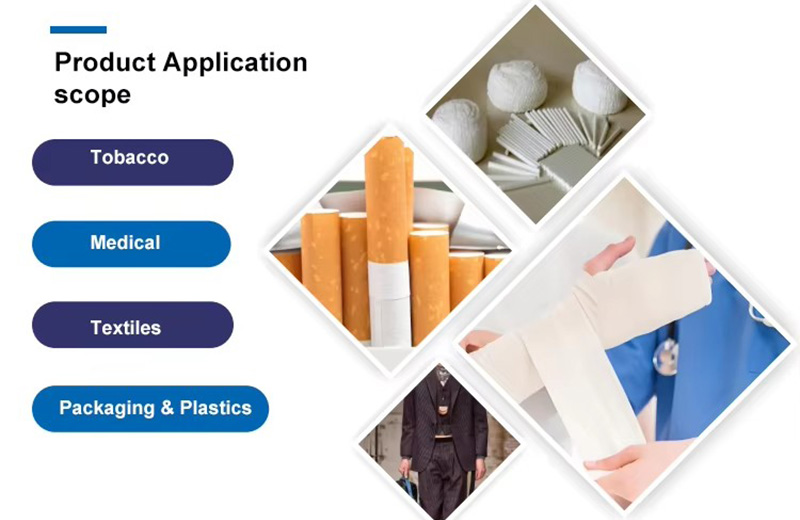
The following are the main classification methods for cellulose acetate:
One、 Classified by esterification degree (combined with acetic acid content)
This is the most core and fundamental classification method, which directly determines the solubility and ultimate use of CA. The degree of esterification is usually expressed by the combined acetic acid content or acetyl content. Cellulose Monoacetate,Cellulose Diacetate( CDA),Cellulose Triacetate(CTA).
Summary of core differences:
Solubility: Cellulose acetate is soluble in water; Cellulose diacetate is soluble in acetone; Cellulose triacetate is insoluble in acetone.
Hydrophilicity/Hydrophobicity: From one to three, hydrophilicity decreases and hydrophobicity increases.
Application areas: Cellulose diacetate is widely used, especially in the fields of fibers and ordinary plastics; Cellulose triacetate focuses on the high-tech and high value-added film field.
Two、 Classified by Form and Product Form
This is a classification based on the physical form of the final product.
1. Cellulose acetate fiber
Long filament: used for textile and clothing (such as lining, satin), and home textiles.
Short fiber: The most common form of product, widely used in cigarette filters. Also used for non-woven fabrics, fillers, etc.
2. Cellulose acetate plastic
Usually sold in granular form, injection molded or extruded.
The products include eyeglass frames, office supplies, toothbrush handles, automotive parts, etc. Has good glossiness, hand feel, and ease of processing.
3. Cellulose acetate film
Ordinary film: used for packaging, printing, binding, etc.
Special film:
TAC film: Cellulose triacetate film is an essential component of liquid crystal displays.
Separation membrane: used for water treatment, hemodialysis, etc.
4. Acetate cellulose sheet
Used for making display boxes, models, eyeglass lenses (partially), etc.
Three、 Classified by special functions and modifications
With the development of technology, many modified cellulose acetate have emerged to meet specific needs.
1. Plasticized cellulose acetate
Add plasticizers (such as phthalates) during the processing to improve its flexibility, impact strength, and processing flowability. Most plastic products belong to this category.
2. High flow grade cellulose acetate
Specially designed for injection molding of complex thin-walled products, with lower melt viscosity.
3. Weathering grade cellulose acetate
UV stabilizer is added to improve the anti-aging performance in outdoor environment.
4. Biodegradable cellulose acetate
Although CA itself originates from natural cellulose, its biodegradation rate is relatively slow. CA materials with better biodegradability can be prepared through specific techniques such as controlling esterification degree and blending.
summary
The classification of cellulose acetate is a multidimensional system:
1. The core is the chemical structure: cellulose diacetate (CDA) and cellulose triacetate (CTA) are the two most important types, and their fundamental difference lies in their esterification degree, which determines their basic properties and solvent systems, leading to completely different application fields.
2. Form determines product form: Depending on the processing method, it can be divided into fiber, plastic, and film.
3. Modification expands application boundaries: Functional products with special properties can be obtained by adding additives or changing the process.
In practical applications, these classification methods are often used in combination, such as "plasticized cellulose acetate plastic pellets" or "high degree of substitution cellulose triacetate film (TAC film)".
Latest News
-
What is cellulose acetate material
2026-04-11 -
Filtration Principles and Main Types of Cellulose Acetate Cigarette Filters
2026-04-08 -
Quality Inspection Report on Industrial Diacetate Cellulose White Powder
2026-04-07 -
Physical and Chemical Properties of White Powder of Cellulose Diacetate
2026-04-03 -
Acetate cellulose sheet raw material industrial use Acetate cellulose powder
2026-04-02 -
Which specification of cellulose acetate is better for leather
2026-03-10
Related Information
-
What is cellulose acetate material
2026-04-11 -
Filtration Principles and Main Types of Cellulose Acetate Cigarette Filters
2026-04-08 -
Quality Inspection Report on Industrial Diacetate Cellulose White Powder
2026-04-07 -
Physical and Chemical Properties of White Powder of Cellulose Diacetate
2026-04-03 -
Acetate cellulose sheet raw material industrial use Acetate cellulose powder
2026-04-02 -
Application of cellulose acetate sheet in the eyewear industry
2026-04-01
Message
We won't track your information when you visit our site. But in order to comply with your preferences, we'll have to use just one tiny cookie so that you're not asked to make this choice again.