


News Center
Focus on new trends in enterprise development and record every step forward.
Main Uses of Industrial Cellulose Diacetate flake
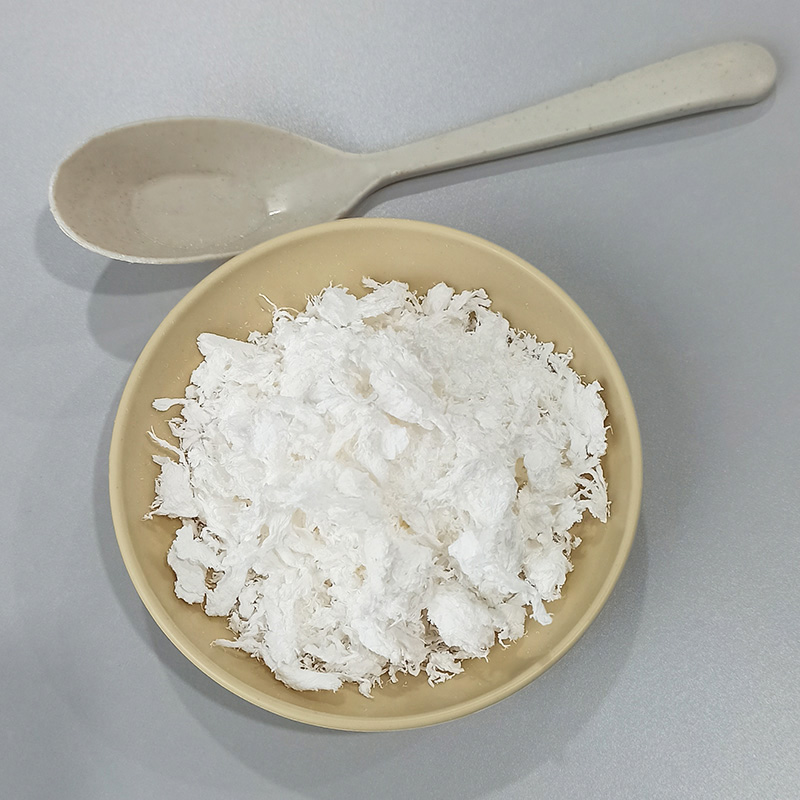
Industrial cellulose diacetate flake (commonly referred to simply as cellulose diacetate or cellulose acetate) are a very important chemical raw material. Due to their excellent properties, they have wide applications in many industrial fields.
1. Cigarette Filters (Core Use)
Process: Industrially produced cellulose diacetate flake are first dissolved in acetone to create a spinning solution. Then, using dry spinning technology, the solution is spun from a spinneret. After the acetone evaporates, thousands of fine cellulose diacetate filaments are obtained. These filaments are then crimped, unwound, wrapped in forming paper, and hardened with triacetyl ester as a plasticizer before being cut into cigarette filters.
Advantages: Non-toxic, odorless, with a good fiber structure that effectively filters tar, selectively adsorbs harmful substances, and has excellent processing performance.
2. Textile Fiber (cellulose acetate fabric)
Cellulose diacetate is the raw material for producing cellulose acetate, a fiber used in the textile industry as a type of
Features: Fabrics made from cellulose acetate are soft, smooth, lustrous, and drape well, closely resembling silk in appearance and feel.
Applications: Widely used in high-end formal wear, dresses, linings, ties, scarves, and home furnishings. It is often blended with other fibers such as cotton and polyester to improve performance.
3. Plastic Products (Injection Molding, Extrusion Molding)
Cellulose diacetate is also a thermoplastic that can be manufactured using traditional plastic processing methods.
Features: High transparency, good gloss, comfortable feel (skin-like), resistant to aging and yellowing, and easy to dye.
Applications: Eyeglass frames: A primary material for manufacturing high-end eyeglass frames (especially acetate frames), favored for its lightweight, vibrant colors, and low skin allergenicity.
Tool handles: Such as screwdriver and brush handles, providing a comfortable and aesthetically pleasing grip.
Office stationery: Such as pen barrels and rulers.
Consumer goods: Such as toys, combs, and buttons.
4. Thin Film Applications
Cellulose diacetate solution can be used to produce thin films via casting.
Applications:
Photographic Film Substrate: Historically, it was the most important substrate for motion picture film and photographic negatives, replacing flammable nitrocellulose film. Although digital technology has reduced its demand, it is still used in some specialized fields.
Industrial Filter Membranes: Used in separation and filtration processes.
Packaging Materials: Used for transparent packaging with special requirements.
Liquid Crystal Display Devices: Used as a support membrane for polarizers.
5. Coatings and Paints
Cellulose diacetate can be used in the coatings industry as a film-forming substance or additive.
Characteristics: Quick-drying, hard film formation, good gloss, light color.
Applications: Commonly used in wood varnishes, metal coatings, leather finishing agents, etc.
6. Other Uses
Separation Membranes: Used in separation technologies such as reverse osmosis and dialysis, such as seawater desalination and hemodialysis.
Adhesives: As a component of certain specialty adhesives.
In summary, industrial cellulose diacetate sheets are a versatile basic material whose value lies in their ability to be further processed into fibers, plastics, and films, and widely used in many industrial sectors closely related to our lives.
Latest News
-
What is cellulose acetate material
2026-04-11 -
Filtration Principles and Main Types of Cellulose Acetate Cigarette Filters
2026-04-08 -
Quality Inspection Report on Industrial Diacetate Cellulose White Powder
2026-04-07 -
Physical and Chemical Properties of White Powder of Cellulose Diacetate
2026-04-03 -
Acetate cellulose sheet raw material industrial use Acetate cellulose powder
2026-04-02 -
Which specification of cellulose acetate is better for leather
2026-03-10
Related Information
-
What is cellulose acetate material
2026-04-11 -
Filtration Principles and Main Types of Cellulose Acetate Cigarette Filters
2026-04-08 -
Quality Inspection Report on Industrial Diacetate Cellulose White Powder
2026-04-07 -
Physical and Chemical Properties of White Powder of Cellulose Diacetate
2026-04-03 -
Acetate cellulose sheet raw material industrial use Acetate cellulose powder
2026-04-02 -
Application of cellulose acetate sheet in the eyewear industry
2026-04-01
Message
We won't track your information when you visit our site. But in order to comply with your preferences, we'll have to use just one tiny cookie so that you're not asked to make this choice again.