


Solution
Collaborative innovation between industry, academia and research, empowering diverse application scenarios
Why is cellulose acetate the ideal filter material
Rayon acetate was able to dominate the cigarette market for decades due to its nearly perfect set of properties:
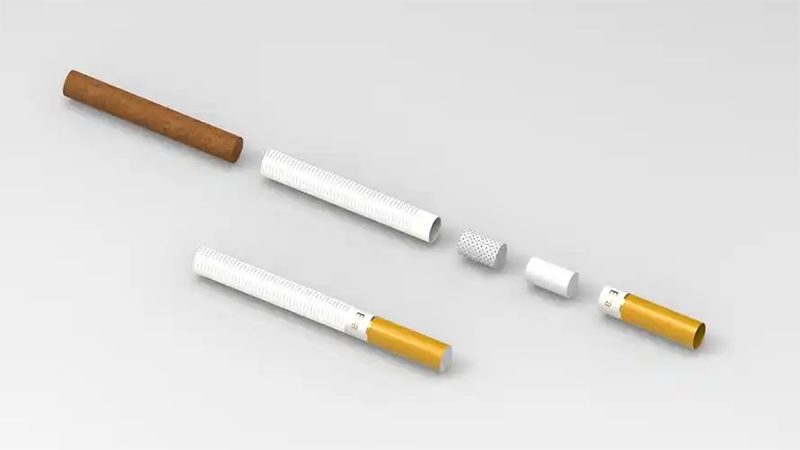
Excellent filtration performance: Cellulose acetate effectively adsorbs tar and partial nicotine from tobacco smoke while maintaining moderate airflow resistance (i.e., smoking resistance), ensuring a smooth smoking experience. This adsorption is achieved through the fiber's large specific surface area and physicochemical interactions.
Excellent processing performance: By adjusting the fineness of fibers, the density of filament bundles, and the dosage of plasticizers, the hardness, airflow resistance, and filtration efficiency of filter tips can be precisely controlled, enabling the production of filter tips with various specifications (such as low-tar and ultra-fine branch types).
Non-toxic and harmless, with high safety: Cellulose acetate is chemically stable, odorless, and non-toxic. It does not decompose to produce harmful substances under normal smoking temperatures and has been recognized by global health regulatory agencies.
Excellent taste and appearance: Cigarettes with acetate filter tips are often perceived to have a "cleaner" smoke taste, free from additional off-flavors.
The Balance of Cost and Technology: After decades of development, its production processes have matured, with comprehensive costs remaining within an acceptable range, forming a complete and efficient global supply chain.
Latest News
-
Application of cellulose acetate sheet in the eyewear industry
2026-04-01 -
Privacy Policy
2026-03-12 -
Application of cellulose diacetate powder in the acetic acid sheet industry
2025-12-11 -
Application of cellulose acetate flakes for plastic industry
2025-12-01 -
Application of Spinning Cellulose Diacetate Flakes in Cigarette Filter Tow
2025-11-28 -
Application of spinning vinegar flakes in the manufacturing of textile filament bundles
2025-11-27
Related Information
-
What is cellulose acetate material
2026-04-11 -
Filtration Principles and Main Types of Cellulose Acetate Cigarette Filters
2026-04-08 -
Quality Inspection Report on Industrial Diacetate Cellulose White Powder
2026-04-07 -
Physical and Chemical Properties of White Powder of Cellulose Diacetate
2026-04-03 -
Acetate cellulose sheet raw material industrial use Acetate cellulose powder
2026-04-02 -
Application of cellulose acetate sheet in the eyewear industry
2026-04-01
Message
We won't track your information when you visit our site. But in order to comply with your preferences, we'll have to use just one tiny cookie so that you're not asked to make this choice again.