


News Center
Focus on new trends in enterprise development and record every step forward.
Acetate fiber eyeglass adhesive sheet
Acetate fiber eyeglass adhesive sheet "is actually what we usually refer to as" sheet eyeglass frame material "or more accurately," acetate cellulose sheet ". It is currently the mainstream and preferred material for manufacturing high-end optical glasses and sunglasses frames.
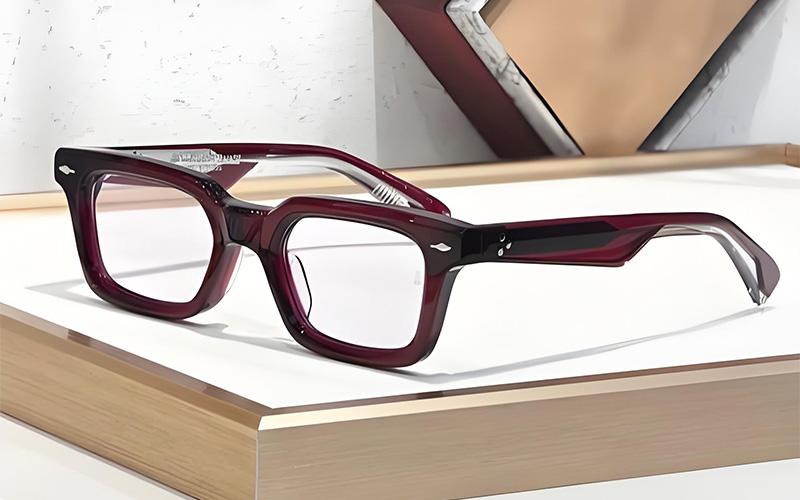
Below is a detailed analysis of the application, characteristics, and manufacturing process of this material in the eyewear industry.
1、 Core concept clarification: Origin of "rubber sheet"
Rubber board "or" celluloid board "is a common term in the industry and among consumers. But it is necessary to distinguish:
Cellar: The earliest used eyeglass sheet in history was nitrocellulose, which is highly flammable and even prone to spontaneous combustion. It has now been largely phased out.
Acetate fiber (plywood): The modern mainstream "board" is made of acetate cellulose, which is safe and flame-retardant, and will automatically extinguish when away from an open flame.
So, when we talk about "laminated glasses" today, the vast majority of them refer to safe and high-quality cellulose acetate glasses.
2、 Why is cellulose acetate the top material for eyeglass frames?
The King of Aesthetics and Design:
Color and texture: It can be dyed into any color, from transparent candy colors to calm tortoiseshell patterns, marble patterns, wood grain, gradient colors, etc., with extremely rich and natural effects. This is incomparable to metal or TR90 materials.
Gloss and texture: After fine polishing, the surface presents a warm and jade like luster, with a delicate touch that is neither cold nor hot, and is skin friendly and comfortable. Has a sophisticated sense of craftsmanship and jewelry.
Excellent processing performance:
Strong plasticity: It can be bent and shaped by heating, giving the temple a perfect fit. Excellent craftsmen can create very complex and three-dimensional shapes.
Easy to polish and repair: Surface scratches can be easily repaired through polishing, making the glasses last forever.
Excellent physical performance:
High strength and toughness: More impact resistant and less prone to breakage than ordinary plastics such as acrylic.
Good stability: After molding, the size is stable and not easily deformed (compared to early celluloid).
Moderate weight: The density is lighter than metal, but it has a sense of weight compared to ultra lightweight materials such as TR90. This "just right weight" is often considered a reflection of quality.
Environmental Protection and Skin friendly:
Biobased materials: derived from natural wood pulp or cotton wool, with a good concept of environmental protection.
Low allergenicity: Friendly to most skin types and not prone to allergies.
3、 Grade and brand of high-end eyeglass adhesive sheet
Not all acetate fiber boards are the same. High end eyewear brands usually choose products from top panel suppliers, which directly determines the texture, durability, and price of the glasses.
Top international sheet metal suppliers:
Mazzucchelli, Italy: The "Hermes" of the eyewear panel industry, with the longest history (starting in 1849), the strongest color research and development capabilities, and the richest and most realistic textures. Many luxury brand glasses specify the use of their panels.
ZEISS, Germany: High quality boards produced according to its optical standards, with excellent purity and consistency.
SEF in France: It is also one of the long-standing high-end suppliers.
Mitsubishi Chemical of Japan: Excellent quality, especially with a high market share in Asia.
Board grade:
A-grade material: The raw material is pure, free of impurities, with transparent and uniform color, and natural texture. Used for high-end brands.
B/C grade materials: may contain bubbles, impurities, and slightly lower levels of color and texture. Used for mid to low end products.
4、 Manufacturing process: from sheet metal to glasses
Cutting: Cut the large piece of board into the prototype of the frame and legs according to the template.
Polishing and Carving: Using CNC machine tools or manual 3D carving to shape the design outline.
Hinge assembly: Accurate installation of hinges is the key to determining the smoothness and durability of glasses opening and closing.
Heating bending: Heat bending the mirror legs to make them ergonomic and comfortable to wear.
Multiple fine polishing: After multiple processes such as rough polishing and fine polishing, a surface as bright as jade is achieved.
Quality inspection: Final inspection of details such as color, symmetry, opening and closing, polishing, etc.
The higher the level of manual involvement (especially in carving, polishing, and hinge tuning), the higher the texture, fit, and value of the glasses.
Acetate fiber eyeglass adhesive sheet is a model that combines the beauty of natural materials, excellent physical properties, and advanced craftsmanship. It is not just a type of 'plastic', but also a material that embodies design aesthetics and craftsmanship spirit. Choosing a high-quality pair of acetate fiber glasses often involves choosing a timeless classic style, a unique wearing texture, and a trustworthy brand and craftsmanship heritage.
Latest News
-
What is cellulose acetate material
2026-04-11 -
Filtration Principles and Main Types of Cellulose Acetate Cigarette Filters
2026-04-08 -
Quality Inspection Report on Industrial Diacetate Cellulose White Powder
2026-04-07 -
Physical and Chemical Properties of White Powder of Cellulose Diacetate
2026-04-03 -
Acetate cellulose sheet raw material industrial use Acetate cellulose powder
2026-04-02 -
Which specification of cellulose acetate is better for leather
2026-03-10
Related Information
-
What is cellulose acetate material
2026-04-11 -
Filtration Principles and Main Types of Cellulose Acetate Cigarette Filters
2026-04-08 -
Quality Inspection Report on Industrial Diacetate Cellulose White Powder
2026-04-07 -
Physical and Chemical Properties of White Powder of Cellulose Diacetate
2026-04-03 -
Acetate cellulose sheet raw material industrial use Acetate cellulose powder
2026-04-02 -
Application of cellulose acetate sheet in the eyewear industry
2026-04-01
Message
We won't track your information when you visit our site. But in order to comply with your preferences, we'll have to use just one tiny cookie so that you're not asked to make this choice again.