


News Center
Focus on new trends in enterprise development and record every step forward.
Drying system for cellulose acetate flakes
The drying of cellulose acetate flakes is a critical step in their production process, which directly affects the quality, performance, and moisture content of the final products (such as cigarette filters, textile materials, films, etc.).
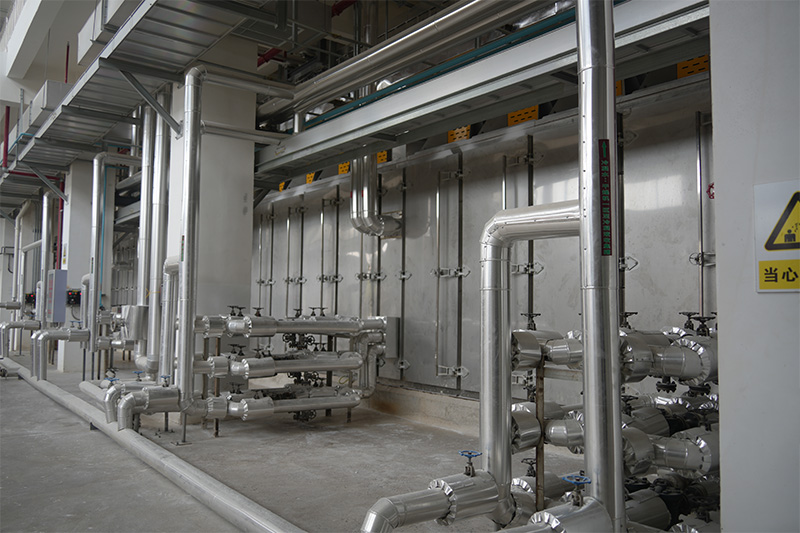
The following will systematically analyze various aspects of the cellulose acetate dryer system:
1、 The core purpose of drying
Removing residual solvents: During the spinning or film making process, solvents such as acetone used need to be thoroughly removed to meet safety and environmental standards.
Control the final moisture content: stabilize the moisture content of CA flakes within the required range of the process (usually very low, such as 3-5%), ensuring the stability and product quality of subsequent processing (such as spinning and injection molding).
Forming and Crystallization: By controlling the drying temperature and time, the microstructure (such as crystallinity) of CA flakes is affected, thereby optimizing their mechanical strength and physical properties.
2、 Typical composition of drying system
A complete CA drying system is usually a continuous production line, mainly consisting of the following parts:
1. Feeding system
Storage bin and feeder: Store wet CA flakes and evenly and quantitatively feed them into the drying machine through screw feeders or belt scales. Ensure stable drying load.
2. Drying host (core equipment)
This is the main location where heat transfer and mass transfer (water evaporation) occur. Common models include:
Multi stage belt dryer:
Structure: Multi layer conveyor belt, CA pieces move along with the belt on the belt.
Drying method: Hot air penetrates the material layer from top to bottom for convective heat transfer. It is usually divided into multiple temperature zones and can independently control temperature and wind speed (such as preheating zone, main drying zone, cooling zone).
Advantages: Uniform material retention time, minimal flipping, and minimal damage to the shape of sheet-like materials; Easy to observe and regulate.
Disadvantage: The equipment occupies a large area.
Rotary cylinder dryer:
Structure: A slightly inclined slow rotating cylinder.
Drying method: A copying plate is installed inside the cylinder, and the CA sheet is picked up and scattered to ensure full contact with the hot air flowing inside the cylinder.
Advantages: Large processing capacity, uniform drying, and sturdy structure.
Disadvantages: The material has slight breakage and relatively high energy consumption.
Fluidized bed dryer:
Structure: A cavity with a gas distribution plate.
Drying method: High pressure hot air is blown from the bottom to make the CA particles in a "fluidized state" (similar to boiling) in the airflow, with a large gas-solid contact area and fast drying rate.
Advantages: High heat and mass transfer efficiency, short drying time, and uniform temperature.
Disadvantages: There are requirements for material particle size and shape, high energy consumption, and may produce fine powder.
3. Hot air system
Heat sources: steam heat exchanger (most common, stable temperature control), electric heating (precise temperature control but high cost), hot blast stove (natural gas/fuel, used for high temperature demand).
Fan: Circulating fan (to circulate most of the hot air in the system, energy-saving), dehumidification fan (to forcefully discharge humid air and maintain dry driving force).
Filtering and regulation: intake air filter (ensuring air cleanliness), humidity/temperature sensor and control system.
4. Solvent recovery system (key environmental and safety components)
Due to the presence of volatile organic solvents (such as acetone) in CA flakes, the solvent concentration in the discharged humid air is very high.
Core equipment: Condensation recovery device. Cool the dry exhaust gas below the dew point of the solvent, condensing the majority of the solvent into a liquid for recycling and reuse.
Auxiliary: Activated carbon adsorption device to treat residual trace solvents in exhaust gas, ensuring compliance with emission standards.
5. Discharge and cooling system
The temperature of the dried CA sheet is relatively high, and it needs to be cooled down to near room temperature through a cooling section (by introducing cold air or indirect water cooling) to prevent clumping and heat accumulation.
The material is discharged through airtight devices such as dampers (rotary valves) and enters the finished product bin.
6. Intelligent control system (brain)
PLC/DCS control: centralized monitoring and automatic adjustment.
Key control parameters: temperature of each drying zone, inlet/outlet air temperature, material residence time (belt speed or drum speed), system air pressure, exhaust gas moisture/solvent content.
Interlocking and safety: over temperature alarm, fan failure shutdown, explosion-proof measures (due to involvement of solvent vapor), etc.
3、 Process description
Wet CA sheet → uniform feeding → drying host (gradually drying in multiple temperature zones) → hot air penetrates/contacts to take away moisture and solvents → moist air containing solvents enters the condensation recovery system → dried CA sheet enters the cooling section → after passing the inspection, it is discharged to the finished product warehouse.
4、 Design and operation points
Accurate temperature control: Excessive temperature can cause yellowing, decomposition, or softening of CA flakes, resulting in bonding into blocks; If the temperature is too low, the drying will not be thorough. It must be precisely set according to the glass transition temperature and process requirements of CA.
Balance of air volume and pressure: Ensure sufficient dry medium while keeping the system under slight negative pressure to prevent solvent vapor leakage.
Solvent recovery efficiency: directly related to production costs and environmental compliance, it is the top priority in system design.
Anti static and explosion-proof: Friction of materials during the drying process can easily generate static electricity, and solvent vapor is flammable and explosive. The equipment needs to have good grounding and explosion-proof design.
Cleaning and maintenance: Regularly clean the interior of the equipment to prevent material accumulation and cross contamination.
5、 Development Trends
Energy saving: By adopting technologies such as heat pump dehumidification and waste heat recovery, energy consumption is significantly reduced.
Intelligence: Utilizing the Internet of Things and artificial intelligence models to achieve predictive control and optimization of the drying process.
Large scale and continuous:
Cooperate with upstream production lines to improve overall production capacity and automation level.
Summary: The dryer system for cellulose acetate flakes is a complex system engineering that integrates chemical drying, mass and heat transfer, mechanical transportation, waste gas recovery, and automatic control. Its core goal is to efficiently, safely, and stably produce high-quality CA products with qualified moisture content and solvent residue, and consistent physical properties. The choice of drying host and supporting scheme should be comprehensively balanced based on material characteristics (sheet size, initial moisture content), production capacity requirements, solvent type, and investment budget.
Latest News
-
What is cellulose acetate material
2026-04-11 -
Filtration Principles and Main Types of Cellulose Acetate Cigarette Filters
2026-04-08 -
Quality Inspection Report on Industrial Diacetate Cellulose White Powder
2026-04-07 -
Physical and Chemical Properties of White Powder of Cellulose Diacetate
2026-04-03 -
Acetate cellulose sheet raw material industrial use Acetate cellulose powder
2026-04-02 -
Which specification of cellulose acetate is better for leather
2026-03-10
Related Information
-
What is cellulose acetate material
2026-04-11 -
Filtration Principles and Main Types of Cellulose Acetate Cigarette Filters
2026-04-08 -
Quality Inspection Report on Industrial Diacetate Cellulose White Powder
2026-04-07 -
Physical and Chemical Properties of White Powder of Cellulose Diacetate
2026-04-03 -
Acetate cellulose sheet raw material industrial use Acetate cellulose powder
2026-04-02 -
Application of cellulose acetate sheet in the eyewear industry
2026-04-01
Message
We won't track your information when you visit our site. But in order to comply with your preferences, we'll have to use just one tiny cookie so that you're not asked to make this choice again.