


News Center
Focus on new trends in enterprise development and record every step forward.
How to judge the quality of cellulose acetate flakes
To determine the quality of cellulose acetate flakes, a comprehensive evaluation should be conducted from five core dimensions: appearance, chemical composition, physical properties, production process control, and application performance. The specific analysis is as follows:
1、 Appearance and Form
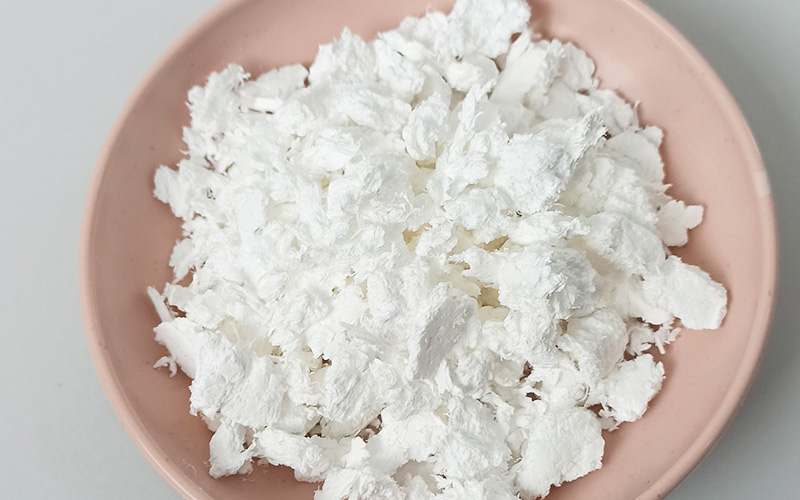
Color and texture: High quality cellulose acetate flakes should be white powder particles or strips, with uniform color and no impurities, spots, or discoloration. If the product turns yellow, gray, or has obvious uneven particles, it may indicate insufficient purity of the raw materials or defects in the production process.
Solubility: Cellulose diacetate flakes should be able to dissolve in organic solvents such as acetone to form a uniform solution. If turbidity, precipitation, or stratification occurs after dissolution, it may indicate uneven molecular weight distribution or the presence of insoluble impurities in the product.
2、 Chemical composition
Acetyl content: Acetyl content is one of the key indicators for measuring the quality of cellulose acetate flakes. The acetyl content of high-quality products is usually between 53% and 56%, which ensures good spinnability and filtration performance of the product. If the acetyl content is too low, it may lead to increased moisture absorption and decreased mechanical properties of the product; If it is too high, it may affect its solubility and processing performance.
Moisture content: Excessive moisture content can cause products to clump and deteriorate, affecting storage stability and processing performance. The moisture content of high-quality cellulose acetate flakes should be controlled at a low level, generally not exceeding 6%.
Heavy metals and impurities: The content of heavy metals (such as lead, mercury, etc.) and other harmful impurities in products should be strictly controlled within a safe range to ensure compliance with environmental and food safety standards.
3、 Physical performance
Molecular weight and its distribution: Molecular weight and its distribution directly affect the mechanical and processing properties of the product. High quality cellulose acetate flakes should have a suitable molecular weight range and a narrow molecular weight distribution to ensure their good strength and uniformity.
Viscosity: Viscosity is an important parameter that reflects the molecular structure and intermolecular forces of a product. The viscosity of high-quality products should be stable and meet specific application requirements, such as the suitable viscosity of cellulose acetate sheets used in the spinning industry to ensure smooth spinning process.
4、 Production process control
Raw material selection: The production of high-quality cellulose acetate sheets should use natural cellulose such as high-purity wood pulp or cotton pulp as raw materials to ensure the purity and consistency of the product.
Production process: The acetylation reaction conditions (such as temperature, pressure, catalyst dosage, etc.) should be strictly controlled during the production process to ensure the stability of acetyl content and molecular weight distribution. At the same time, post-processing procedures such as hydrolysis, precipitation, washing, drying, etc. should also be finely operated to remove impurities and residual solvents.
Quality control system: Production enterprises should establish a sound quality control system, conduct strict testing on raw materials, semi-finished products, and finished products, and ensure that products meet relevant standards and customer requirements.
5、 Application performance
Spinning performance: For cellulose acetate sheets used in the spinning industry, their spinning performance is one of the important indicators for evaluating quality. High quality products should have good spinnability, be able to form uniform and continuous bundles, and the mechanical properties such as strength and elongation of the bundles should meet specific application requirements.
Filtering performance: For cellulose acetate sheets used as filtering materials, their filtering performance is a key indicator for evaluating quality. High quality products should have efficient filtration efficiency and good breathability, which can effectively intercept harmful substances (such as tar, nicotine, etc.) in flue gas, while maintaining low pressure drop and long service life.
Latest News
-
What is cellulose acetate material
2026-04-11 -
Filtration Principles and Main Types of Cellulose Acetate Cigarette Filters
2026-04-08 -
Quality Inspection Report on Industrial Diacetate Cellulose White Powder
2026-04-07 -
Physical and Chemical Properties of White Powder of Cellulose Diacetate
2026-04-03 -
Acetate cellulose sheet raw material industrial use Acetate cellulose powder
2026-04-02 -
Which specification of cellulose acetate is better for leather
2026-03-10
Related Information
-
What is cellulose acetate material
2026-04-11 -
Filtration Principles and Main Types of Cellulose Acetate Cigarette Filters
2026-04-08 -
Quality Inspection Report on Industrial Diacetate Cellulose White Powder
2026-04-07 -
Physical and Chemical Properties of White Powder of Cellulose Diacetate
2026-04-03 -
Acetate cellulose sheet raw material industrial use Acetate cellulose powder
2026-04-02 -
Application of cellulose acetate sheet in the eyewear industry
2026-04-01
Message
We won't track your information when you visit our site. But in order to comply with your preferences, we'll have to use just one tiny cookie so that you're not asked to make this choice again.