


News Center
Focus on new trends in enterprise development and record every step forward.
What is the cellulose content of Cellulose diacetate flake
Simply put, the cellulose content of Cellulose diacetate flake (referred to as diacetate flake) is usually above 98%. The essence of "cellulose content" refers to the purity of cellulose acetate, a chemical, rather than the content of raw natural cellulose.
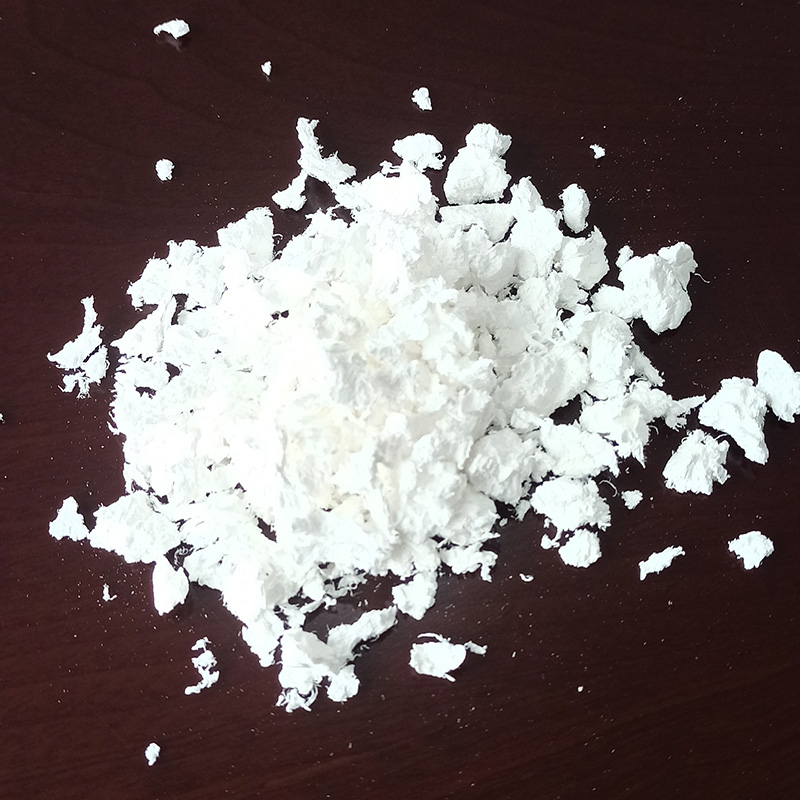
key metrics
1. Acetyl content: The acetyl content of Cellulose diacetate flake is usually between 54% and 56%.
2. Aggregation degree: determines the viscosity of the solution and the mechanical properties of the final product, typically ranging from 180 to 300.
3. Moisture: usually controlled at ≤ 5%.
A more detailed explanation is as follows:
Cellulose diacetate itself is a chemical derivative. Its production process is as follows:
Starting from high-purity cotton short fibers or wood pulp (whose core component is cellulose).
Acetylation of hydroxyl groups on cellulose molecular chains is carried out through esterification reaction of acetic acid and acetic anhydride under the action of catalyst.
After a series of refining processes such as hydrolysis, precipitation, washing, and drying, cellulose acetate products are finally obtained.
In this process, impurities such as lignin, hemicellulose, ash, etc. in the raw material cellulose have been basically removed, and the cellulose molecular chains themselves are transformed into cellulose acetate through chemical reactions.
Therefore, when it comes to the cellulose content of Cellulose diacetate flake, a more accurate understanding is:
Product purity: In the final product, the content of cellulose acetate is extremely high, usually not less than 98%. The remaining minimal portion may contain trace amounts of moisture, residual catalysts (such as sulfates), and trace inorganic salts (ash) that have not been completely removed.
Degree of polymerization: In addition to purity, another key indicator is degree of polymerization, which represents the average length of cellulose molecular chains. The polymerization degree range of Cellulose diacetate flake is very wide, usually between 180 and 300 depending on the application (sometimes the range is wider, such as 150-550). The degree of polymerization of diacetate sheets in fiber bundles is usually low (such as 180-220), while the degree of polymerization of diacetate sheets in plastics (such as eyeglass frames and tool handles) is higher (such as 260-300).
Latest News
-
What is cellulose acetate material
2026-04-11 -
Filtration Principles and Main Types of Cellulose Acetate Cigarette Filters
2026-04-08 -
Quality Inspection Report on Industrial Diacetate Cellulose White Powder
2026-04-07 -
Physical and Chemical Properties of White Powder of Cellulose Diacetate
2026-04-03 -
Acetate cellulose sheet raw material industrial use Acetate cellulose powder
2026-04-02 -
Which specification of cellulose acetate is better for leather
2026-03-10
Related Information
-
What is cellulose acetate material
2026-04-11 -
Filtration Principles and Main Types of Cellulose Acetate Cigarette Filters
2026-04-08 -
Quality Inspection Report on Industrial Diacetate Cellulose White Powder
2026-04-07 -
Physical and Chemical Properties of White Powder of Cellulose Diacetate
2026-04-03 -
Acetate cellulose sheet raw material industrial use Acetate cellulose powder
2026-04-02 -
Application of cellulose acetate sheet in the eyewear industry
2026-04-01
Message
We won't track your information when you visit our site. But in order to comply with your preferences, we'll have to use just one tiny cookie so that you're not asked to make this choice again.