


News Center
Focus on new trends in enterprise development and record every step forward.
The detailed process flow for producing cellulose acetate eyeglass frames
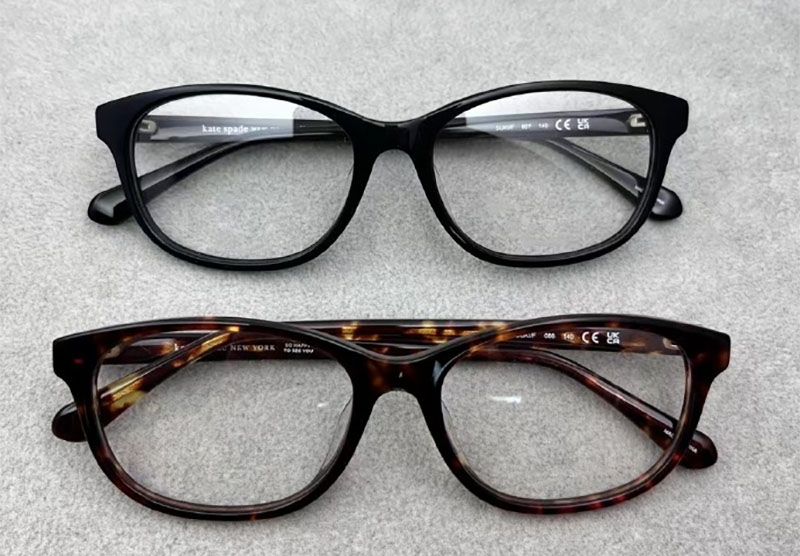
The manufacturing of acetate fiber eyeglass frames is a complex process that combines modern industry and traditional craftsmanship, with a particular emphasis on "handmade production", which is also where its value lies.
Phase 1: Sheet Metal Manufacturing
This is the foundation for determining the appearance of eyeglass frames and is typically completed at a professional sheet metal factory.
1. Raw Material Preparation and Dyeing:
The cellulose acetate film is soaked in specific dyes for coloring. To create patterns, sheets of different colors are layered and stacked.
2. Lamination and Curing:
Place the dyed and stacked thin layers into a high-pressure machine, where they are pressed together under high temperature and pressure to form a solid, sturdy block. This process firmly bonds the layers together and creates the final pattern.
3. Aging and Cutting:
The laminated board needs to undergo a period of "aging" to release internal stress and stabilize its dimensions.
Finally, cut the large sheets into standard thickness blanks suitable for eyeglass processing.
Phase Two: Eyeglass Frame Processing
This is the core process of the eyeglass factory.
1. Design & Layout:
After the designer completes the blueprint, the technical staff will create precise templates.
2. Saw Frame & Milling (Rough Cutting & Milling):
Frame Cutting: Secure the template onto an acetate board and use a band saw or laser cutter to preliminarily cut the outline of the frame and the temple arms.
Slot Milling: Using a precision milling machine, cut the groove (lens slot) for installing lenses on the inner side of the frame, while reserving space for hinge installation.
3. Shaping:
Hot bending: The cut rough piece is heated in a specific oven or hot oil to soften it, then bent into a three-dimensional shape that conforms to the arc of the facial cheekbone.
Pre-polishing treatment: Perform initial grinding on the formed frame to remove burrs and visible tool marks.
4. Hinge Fitting:
This is a highly meticulous step, typically performed by skilled technicians by hand. Precise holes are drilled into the frame and temples, and the metal hinges are installed to ensure smooth opening and closing with proper tension.
5. Hand Polishing:
This is the crucial step in infusing life into acetate fiber eyeglasses. Technicians use sanding wheels of varying grits, cloth wheels, and polishing compounds to repeatedly grind and polish the lenses.
This process not only removes all scratches but also fully reveals the color and texture layers within the board, presenting a smooth, jade-like luster.
6. Surface Decoration:
Depending on the design requirements, surface treatments such as laser engraving, inlaying (e.g., rhinestones, mother-of-pearl), and logo printing may be applied.
7. Assembly:
Connect the polished temple and frame together using hinges.
Install the nose pads (typically separate silicone or metal nose pads, fixed to the frame via a metal core).
Install the decorative piece or logo on the temple post (the part connecting the frame and the temples).
8. Quality Inspection and Packaging (QC & Packaging):
Conduct strict inspections on finished products, including dimensional symmetry, hinge functionality, surface finish, and color difference.
After passing the inspection, the items are cleaned, wrapped in film, and then packed into exquisite boxes.
Latest News
-
What is cellulose acetate material
2026-04-11 -
Filtration Principles and Main Types of Cellulose Acetate Cigarette Filters
2026-04-08 -
Quality Inspection Report on Industrial Diacetate Cellulose White Powder
2026-04-07 -
Physical and Chemical Properties of White Powder of Cellulose Diacetate
2026-04-03 -
Acetate cellulose sheet raw material industrial use Acetate cellulose powder
2026-04-02 -
Which specification of cellulose acetate is better for leather
2026-03-10
Related Information
-
What is cellulose acetate material
2026-04-11 -
Filtration Principles and Main Types of Cellulose Acetate Cigarette Filters
2026-04-08 -
Quality Inspection Report on Industrial Diacetate Cellulose White Powder
2026-04-07 -
Physical and Chemical Properties of White Powder of Cellulose Diacetate
2026-04-03 -
Acetate cellulose sheet raw material industrial use Acetate cellulose powder
2026-04-02 -
Application of cellulose acetate sheet in the eyewear industry
2026-04-01
Message
We won't track your information when you visit our site. But in order to comply with your preferences, we'll have to use just one tiny cookie so that you're not asked to make this choice again.