


News Center
Focus on new trends in enterprise development and record every step forward.
The application differences between industrial cellulose acetate flake and cellulose acetate tow
The application differences between industrial cellulose acetate flake and cellulose tow bundles are mainly reflected in four aspects: raw material use, processing form, core application areas, and performance emphasis. The specific analysis is as follows:
One、 Raw material usage: Different basic positioning
1. Cellulose diacetate flake(vinegar tablets)
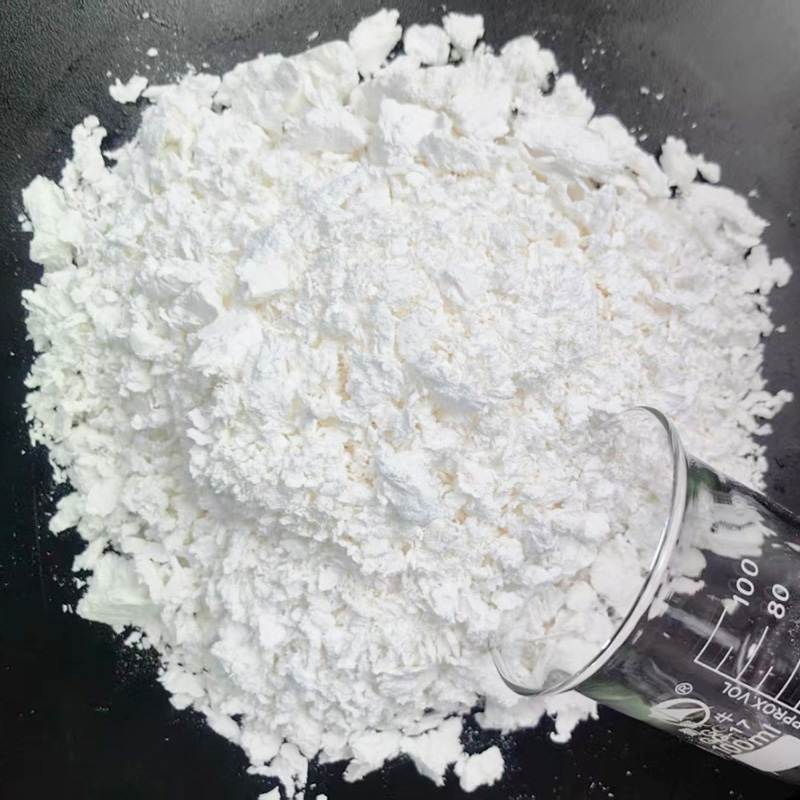
As the core raw material for producing cellulose acetate tow, its essence is modified regenerated cellulose. Made by acetylation reaction of high-purity wood pulp or cotton pulp, it is in the form of white powder particles or strips, soluble in organic solvents such as acetone, and has the chemical properties of direct spinning.
2. Cellulose acetate tow
The finished fiber bundles made from vinegar slices through processes such as dissolution, spinning, curling, and drying are downstream products of vinegar slices. Its form is continuous filament bundle, directly used for terminal product manufacturing.
Two、 Processing form: differences in physical structure
1. Cellulose diacetate flake
Form: Solid particles or flakes, which need to be converted into spinning solution through dissolution process.
Processing key: It is necessary to control the degree of acetylation (acetyl content 53-56%) and solubility to ensure the stability of the spinning solution.
2. Cellulose acetate tow
Form: Composed of 5000 or more long filaments with a fineness of 3.33 microns coiled and bundled together, with a Y-shaped cross-section and a large specific surface area.
Processing key: The fiber structure is formed through dry spinning process (such as hot air flash curing), and the curl degree needs to be optimized to improve filtration efficiency or textile performance.
Three、 Core application areas: Function oriented differentiation
Cellulose diacetate flake
1. Tobacco industry: indirect application (as raw material for fiber bundles)
2. Textile and Clothing: Indirect Applications (Part of Textile Raw Materials)
3. Industrial materials: indirect applications (some plastic raw materials)
4. Special purpose: requires further processing (such as film formation after dissolution)
Cellulose acetate tow
1. Tobacco industry: direct application (cigarette filter core material)
2. Textile and Clothing: Direct Application (High end Clothing)
3. Industrial materials: direct application (mirror frame, tool handle)
4. Special purpose: Direct application (cigarette pack transfer coating)
Four、 Performance focus: complementary functional characteristics
1. Cellulose diacetate flake
Chemical stability: The molecular chain contains a large number of ester groups, is resistant to water and general organic solvents, but is easily destroyed by strong acids and bases.
Processability: It needs to be converted into spinning solution through dissolution process, with high requirements for solubility (such as about 8% solubility in acetone) and rheological properties.
2. Cellulose acetate tow
Physical properties:
A、 Adsorption: The Y-shaped cross-section increases the specific surface area, improving the efficiency of flue gas filtration or liquid purification.
B、 Thermoplastic: It can soften and reshape at a certain temperature, making it convenient for textile processing or mold forming.
C、 Biocompatibility: Non toxic and harmless, in compliance with medical consumables safety standards.
Summary: Application Logic and Selection Basis
Vinegar slices, as an intermediate raw material, require downstream processing (such as spinning) to achieve functional conversion, making them suitable for scenarios that require customized fiber properties (such as adjusting filter adsorption efficiency or textile feel).
As a finished fiber, fiber bundles directly meet terminal needs, and their application selection depends on the priority of physical properties (such as adsorption and breathability) or biological characteristics (such as compatibility). For example, the tobacco industry prioritizes fiber bundles to directly control filter performance.
Latest News
-
What is cellulose acetate material
2026-04-11 -
Filtration Principles and Main Types of Cellulose Acetate Cigarette Filters
2026-04-08 -
Quality Inspection Report on Industrial Diacetate Cellulose White Powder
2026-04-07 -
Physical and Chemical Properties of White Powder of Cellulose Diacetate
2026-04-03 -
Acetate cellulose sheet raw material industrial use Acetate cellulose powder
2026-04-02 -
Which specification of cellulose acetate is better for leather
2026-03-10
Related Information
-
What is cellulose acetate material
2026-04-11 -
Filtration Principles and Main Types of Cellulose Acetate Cigarette Filters
2026-04-08 -
Quality Inspection Report on Industrial Diacetate Cellulose White Powder
2026-04-07 -
Physical and Chemical Properties of White Powder of Cellulose Diacetate
2026-04-03 -
Acetate cellulose sheet raw material industrial use Acetate cellulose powder
2026-04-02 -
Application of cellulose acetate sheet in the eyewear industry
2026-04-01
Message
We won't track your information when you visit our site. But in order to comply with your preferences, we'll have to use just one tiny cookie so that you're not asked to make this choice again.