


News Center
Focus on new trends in enterprise development and record every step forward.
Global regional distribution and production capacity of cellulose acetate for tobacco
Cigarette cellulose acetate (mainly in the form of acetate tow) is the core material for cigarette filters. Due to its high production technology threshold and large capital investment, the global market exhibits a highly concentrated characteristic.
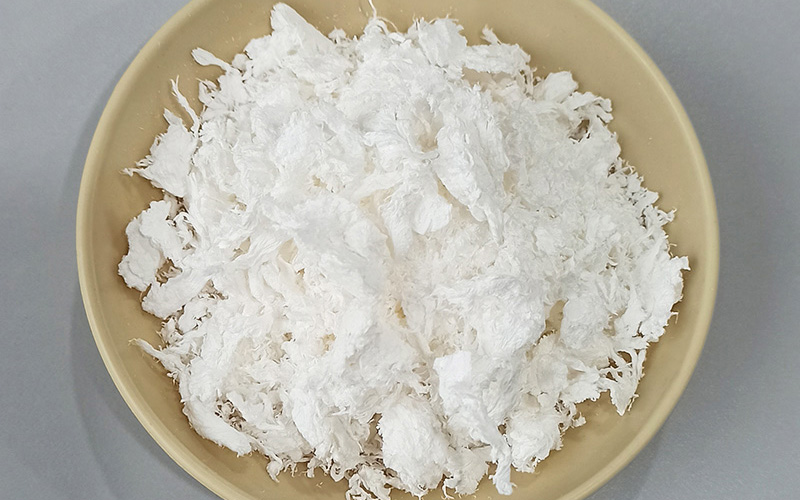
The following is a detailed analysis of the regional distribution, current production capacity, and major producers of global tobacco cellulose acetate:
I. Overview and Distribution of Global Production Capacity
The total production capacity of global cigarette acetate tow is approximately 800,000 to 900,000 tons. The distribution of production capacity exhibits a clear trend of "tripartite confrontation" and "shifting towards Asia".
Core driving factors of regional market share (estimated)
In the Asia-Pacific region, countries such as China, India, and Indonesia account for approximately 50% of cigarette consumption, with production bases expanding steadily.
Approximately 30% of the North American region boasts the world's most advanced production technology, and is home to the headquarters of giants such as Celanese and Eastman.
Despite a decline in demand due to anti-smoking policies, Europe still accounts for approximately 15% of high-end tow exports.
II. Core producers and their capacity status
The global market for tobacco cellulose acetate is primarily dominated by a handful of multinational giants and joint venture/wholly-owned factories under the umbrella of China National Tobacco Corporation (CNTC).
1. International giants (accounting for over 65% of the global market share)
Celanese (Celanese, USA): The world's largest producer with a market share exceeding 30%. Maintains its leadership position through a global footprint, including joint ventures with China Tobacco.
Eastman (美国):A veteran cellulose giant with a complete industrial chain, producing not only tow but also upstream cellulose acetate flakes.
Cerdia (formerly Solvay Cellulose Fibers, headquartered in Switzerland): With significant production capacity in Europe (Germany), Brazil, and Russia, it is the third largest supplier globally.
Daicel (Japan): Primarily supplying the Asia-Pacific and certain international markets, it has been dedicated to the research of biodegradable tow in recent years.
2. Distribution in the Chinese market
China is the world's largest producer and consumer of tobacco acetate tow. Its production capacity structure is unique, mainly consisting of two parts: joint ventures and domestic production
Joint venture factories: including Nantong Acetate Fiber Co., Ltd. (a joint venture between China Tobacco and Celanese), Zhuhai Acetate Fiber Co., Ltd., and Kunming Acetate Fiber Co., Ltd.
These factories provide the vast majority of high-quality tow supply in China.
Domestic self-reliance: In recent years, local enterprises represented by Xi'an Huian, Xinyang Special Fiber, and Ruiyang New Materials have continued to make efforts in the field of specialty tow and domestic substitution, but their overall scale still lags behind that of joint ventures.
III. Industry Trends and Capacity Dynamics
Overcapacity and structural adjustment: Due to the decline in smoking rates in Western countries, the global acetate fiber market once faced overcapacity. Producers are closing high-cost factories (such as some outdated production lines in Europe) and shifting production capacity to high-demand regions such as Southeast Asia and China.
Technical barriers: Tobacco tow requires extremely high filtration efficiency and consistency in taste. Currently, the market is shifting towards fine-cut tobacco tow and special functional tow (such as those with added essence and colored tow).
Impact of environmental regulations: With the implementation of the EU's Single-Use Plastics Directive (SUP Directive), degradable acetate fiber has become a focal point of research and development. Currently, companies such as Celanese and Daicel are accelerating the promotion of cellulose materials with stronger biodegradability.
Latest News
-
What is cellulose acetate material
2026-04-11 -
Filtration Principles and Main Types of Cellulose Acetate Cigarette Filters
2026-04-08 -
Quality Inspection Report on Industrial Diacetate Cellulose White Powder
2026-04-07 -
Physical and Chemical Properties of White Powder of Cellulose Diacetate
2026-04-03 -
Acetate cellulose sheet raw material industrial use Acetate cellulose powder
2026-04-02 -
Which specification of cellulose acetate is better for leather
2026-03-10
Related Information
-
What is cellulose acetate material
2026-04-11 -
Filtration Principles and Main Types of Cellulose Acetate Cigarette Filters
2026-04-08 -
Quality Inspection Report on Industrial Diacetate Cellulose White Powder
2026-04-07 -
Physical and Chemical Properties of White Powder of Cellulose Diacetate
2026-04-03 -
Acetate cellulose sheet raw material industrial use Acetate cellulose powder
2026-04-02 -
Application of cellulose acetate sheet in the eyewear industry
2026-04-01
Message
We won't track your information when you visit our site. But in order to comply with your preferences, we'll have to use just one tiny cookie so that you're not asked to make this choice again.